Table of Contents
ToggleMost bathrooms have one thing in common: wasted vertical space right above the toilet. It’s prime real estate that’s often ignored, even in tight quarters where every square inch counts. Over-toilet storage turns that dead zone into functional shelving, cabinetry, or display space without eating into your floor plan. Whether you’re dealing with a cramped half-bath or a full bathroom that needs better organization, the right storage solution can hold towels, toiletries, and cleaning supplies while keeping countertops clear. This guide breaks down the best options, installation considerations, and styling strategies to help you make the most of that overlooked vertical space.
Key Takeaways
- Bathroom over toilet storage maximizes 4–6 feet of unused vertical space without eating into floor space, making it ideal for small bathrooms and tight quarters.
- Freestanding units offer renter-friendly, no-drill options with easy assembly, while wall-mounted shelves and cabinets provide better stability and weight capacity for 30–50+ pounds per shelf.
- Proper measurements of width, height, and depth—combined with assessment of moisture resistance, storage needs, and style preferences—ensure you select the right over-toilet storage solution for your bathroom.
- Safety considerations for installation include using stud finders, proper anchors, and safety goggles when drilling overhead, especially into tile or plaster.
- Styling over-toilet storage with bins, baskets, and grouped items keeps the space both functional and visually appealing while preventing clutter.
Why Over-Toilet Storage Is a Game-Changer for Small Bathrooms
Small bathrooms present a spatial puzzle: you need storage, but floor space is limited. Over-toilet storage solves this by using vertical space that would otherwise go unused.
Most toilets occupy roughly 30 inches of width and sit about 12 inches from the wall (measured to the center of the drain). The wall space above the tank, from the top of the tank to the ceiling, typically offers 4 to 6 feet of vertical real estate. That’s enough room for three to five shelves or a cabinet unit, depending on ceiling height.
This vertical approach keeps items within arm’s reach without cluttering counters or requiring a linen closet. It’s particularly useful in powder rooms, guest baths, or rental units where built-in storage is minimal. You’re not adding square footage: you’re just using what’s already there more efficiently.
Beyond the practical benefits, over-toilet storage can visually balance a bathroom. A tall shelving unit or cabinet draws the eye upward, making a small room feel less cramped. It also creates a focal point that can tie together your bathroom’s design, whether that’s modern minimalist, farmhouse, or traditional.
Types of Over-Toilet Storage Solutions
Freestanding Shelving Units
Freestanding units (often called “spacesaver” or “etagere” shelves) straddle the toilet without mounting to the wall. They typically feature two vertical posts that rest on the floor, with three to four shelves spanning the width.
Pros:
- No drilling or wall anchors required, ideal for renters or anyone avoiding wall damage
- Easy to assemble (most units use cam locks or screws and can be put together in under 30 minutes)
- Portable: you can take it with you or move it to another bathroom
- Works on any wall type (tile, drywall, plaster) without special hardware
Cons:
- Less stable than wall-mounted options, especially on uneven tile floors
- Footprint can interfere with toilet access or cleaning around the base
- Weight capacity is lower: most support 10 to 15 pounds per shelf
- Can tip forward if overloaded on upper shelves (look for models with anti-tip straps)
Material options: Metal frames (usually powder-coated steel or chrome) are sturdy and moisture-resistant. Wood or engineered wood (MDF with laminate or veneer) offers a warmer look but needs proper sealing in humid bathrooms. Bamboo is a middle ground, naturally moisture-tolerant and lightweight.
Dimensions to check: Standard toilet widths run 27 to 30 inches, but measure your specific model. Most freestanding units are designed for 24 to 28 inches of clearance between the posts. Also measure the distance from the wall to the front of the tank: you need at least 10 to 12 inches of depth for the unit’s footprint.
Wall-Mounted Shelves and Cabinets
Wall-mounted storage attaches directly to the wall, offering a cleaner look and better stability. Options range from simple floating shelves to full cabinet enclosures with doors.
Open shelves:
- Easiest to install (typically two to four wall anchors per shelf)
- Keeps items visible and accessible
- Works well for decorative displays or frequently used items
- Requires regular dusting and tidying to avoid a cluttered look
Cabinets with doors:
- Conceals clutter and protects contents from dust and moisture
- May include mirrors, towel bars, or built-in lighting
- Heavier and requires proper anchoring into wall studs or heavy-duty toggle bolts rated for the weight
- Installation takes longer (plan for 45 minutes to an hour, depending on your wall type)
Installation considerations:
- Stud location: Use a stud finder to locate framing. Standard stud spacing is 16 or 24 inches on center. If studs don’t align with your shelf or cabinet mounting holes, use toggle bolts or screw-in drywall anchors rated for the load.
- Wall type matters: Drywall is straightforward. Tile requires a carbide or diamond-tipped bit and careful drilling to avoid cracking. Plaster is brittle: pre-drill pilot holes and work slowly.
- Clearance from tank: Leave at least 4 to 6 inches between the bottom shelf/cabinet and the top of the toilet tank. This allows you to remove the tank lid for repairs and keeps shelves out of splash zones.
- Weight limits: A properly installed shelf into studs can hold 50+ pounds, but check the manufacturer’s specs. Wall-mounted cabinets with glass shelves or mirrored doors can weigh 30 to 40 pounds empty, so anchoring is critical.
Safety note: Always wear safety goggles when drilling overhead, especially into tile or plaster. Debris and dust fall directly into your face. A dust mask is also smart when drilling into drywall or older plaster that may contain asbestos.
How to Choose the Right Over-Toilet Storage for Your Bathroom
Choosing the right unit starts with measurements and ends with matching your storage needs to the design.
Step 1: Measure your space
- Width: Measure the distance between the walls flanking the toilet, not just the toilet itself. Freestanding units need clearance on both sides.
- Height: Measure from the top of the toilet tank to the ceiling. Subtract 6 to 12 inches to avoid a cramped look and allow for ceiling fixtures or crown molding.
- Depth: Measure from the wall to the front edge of the tank. Most units are 8 to 10 inches deep, but verify this won’t block the toilet paper holder or interfere with sitting down.
Step 2: Assess your storage needs
What are you storing? Bulky items like extra toilet paper rolls and towel sets need deeper shelves (10+ inches). Small toiletries, cosmetics, or decorative items work fine on shallow shelves (6 to 8 inches).
Do you need concealment? If you’re storing cleaning supplies, medications, or personal items, a cabinet with doors makes sense. Open shelves are better for decorative baskets, plants, or neatly folded towels.
Step 3: Match the style to your bathroom
- Modern/minimalist: Look for metal frames in matte black or brushed nickel, glass shelves, or floating wood shelves with hidden brackets.
- Farmhouse/rustic: Distressed wood shelves, ladder-style units, or white-painted cabinets with bead-board panels.
- Traditional: Dark wood cabinets, ornate brackets, or units with crown molding details.
Step 4: Consider moisture resistance
Bathrooms are humid. If your bathroom lacks an exhaust fan or tends to steam up, prioritize materials that resist warping and mold:
- Metal (stainless steel, powder-coated steel, or aluminum) won’t warp or rot
- Solid wood needs a waterproof finish (polyurethane or marine-grade varnish)
- Engineered wood (MDF, particleboard) should have a moisture-resistant coating or laminate: unfinished edges will swell
- Bamboo is naturally more water-resistant than most hardwoods
Step 5: Check weight capacity
Manufacturers usually list weight limits per shelf. A typical freestanding unit holds 10 to 20 pounds per shelf: wall-mounted shelves into studs can handle 30 to 50+ pounds. For comparison, a stack of four bath towels weighs about 3 to 4 pounds, and a 12-pack of toilet paper is roughly 8 pounds.
Exploring bathroom storage options can help you compare styles and features across a wide range of products.
Installation Tips and Best Practices
Freestanding units:
- Assemble on a flat surface before positioning. Most units use cam locks or Allen screws. Keep the hardware organized and follow the diagram.
- Level the floor first. If your bathroom floor is tile with grout lines or slightly uneven, use adhesive furniture pads or shims under the legs to prevent wobbling.
- Position the unit carefully. Slide it over the toilet, centering it so the posts sit equidistant from the tank. Check that the bottom shelf clears the tank lid.
- Secure against tipping. Some units include anti-tip straps or brackets that attach to the wall. If not included, add an L-bracket at the top rear corners screwed into the wall. This is especially important in homes with kids or pets.
Wall-mounted shelves and cabinets:
- Find the studs. Use a stud finder and mark the centers with painter’s tape. If studs don’t align, use toggle bolts rated for your shelf/cabinet weight (check packaging for load ratings).
- Mark your mounting holes. Hold the shelf or cabinet in place (a second pair of hands helps) and use a level to ensure it’s plumb. Mark the screw holes with a pencil.
- Drill pilot holes. For drywall into studs, use a bit slightly smaller than your screw diameter. For tile, start with a small bit (1/8 inch) to score the glaze, then switch to a carbide bit matching your anchor size. Go slow to avoid cracking.
- Install anchors if needed. Insert toggle bolts or screw-in anchors, then attach the shelf or cabinet. Tighten screws evenly to avoid warping the unit or cracking tile.
- Check level after installation. Even a small tilt will be noticeable and can cause items to slide off shelves.
Safety and tools:
- PPE: Safety goggles (mandatory when drilling overhead), dust mask (for drywall or plaster), work gloves (for handling metal edges).
- Tools: Cordless drill/driver, level, stud finder, tape measure, pencil, appropriate drill bits (twist bits for wood/drywall, carbide or diamond for tile).
- Optional but helpful: A magnetic bit holder, a second set of hands, and a vacuum to clean up dust as you go.
Permit note: Installing shelving or cabinets is typically cosmetic work that doesn’t require a permit. But, if you’re opening a wall or adding electrical (like a lighted medicine cabinet hardwired to a switch), check your local building codes.
Creative Ways to Style Your Over-Toilet Storage
Once your storage is installed, styling it well keeps the space functional and visually appealing. Here’s how to make the most of those shelves.
Group items by use and frequency:
- Top shelf: Items you rarely need (extra toilet paper, seasonal decor, backup toiletries)
- Middle shelves: Everyday items (hand towels, small bins for cotton balls or swabs, a decorative plant)
- Bottom shelf: Frequently used items (current toilet paper roll, hand soap refill, cleaning spray)
Use bins and baskets for containment:
Open shelves can look messy fast. Wire baskets, woven bins, or fabric cubes corral small items and create visual order. Choose containers that fit the shelf depth (leave 1 to 2 inches of clearance at the front edge so they don’t stick out).
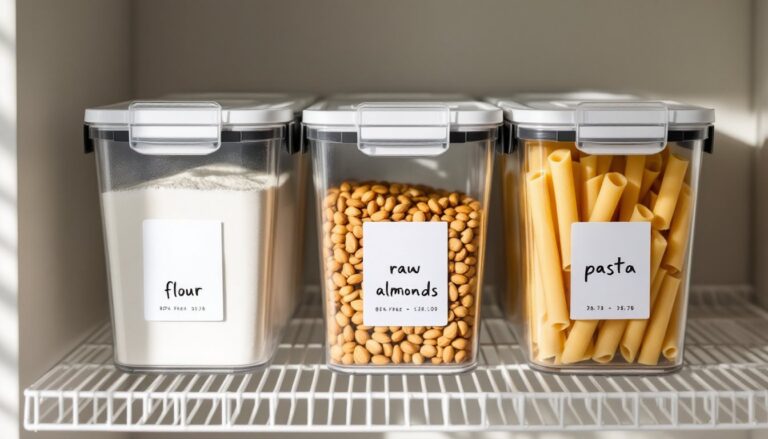
Label if needed: In a shared or guest bathroom, small labels (chalkboard tags, printed labels, or adhesive tags) help everyone find what they need.
Add greenery:
Plants soften hard surfaces and thrive in bathroom humidity. Good low-light options include pothos, snake plants, and ZZ plants. Use small pots (4 to 6 inches) and place them on saucers to catch water. For creative ideas on keeping your bathroom counter tidy, consider similar principles of balance and function.
Incorporate color and texture:
- Roll towels instead of folding them for a spa-like look
- Use matching or coordinating containers (all white ceramic, all woven baskets, or all clear glass)
- Add a small decorative object (a candle, a framed print, or a ceramic dish) to break up the utilitarian items
Keep it functional, not fussy:
Over-toilet storage is a working part of your bathroom, not a curated shelf in a showroom. Prioritize access and practicality. If you have to move three things to grab toilet paper, you’ve over-styled it.
For additional inspiration, resources like Real Simple’s bathroom storage ideas and Homify’s over-toilet storage gallery showcase a range of approaches, from minimalist to layered. Design experts at Martha Stewart also emphasize balancing aesthetics with everyday usability in small spaces.
Final tip: Rotate items seasonally. Swap out heavy towels for lightweight ones in summer, or change decor to match holidays. This keeps the space feeling fresh without requiring a full overhaul.