Table of Contents
ToggleA tiny bathroom doesn’t have to feel like a cluttered closet. The challenge isn’t the square footage, it’s finding creative ways to use what’s already there. Most small bathrooms have hidden potential in overlooked corners, vertical walls, and awkward nooks that standard storage solutions ignore. With the right approach, even a powder room the size of a phone booth can hold towels, toiletries, cleaning supplies, and backup rolls without looking like a general store exploded. This guide breaks down 15 practical, installer-tested storage ideas that make every inch count, from recessed shelving to clever under-sink organizers that actually work.
Key Takeaways
- Tiny bathroom storage ideas focus on maximizing vertical space through floating shelves, recessed cabinets, and wall-mounted solutions that keep essentials accessible without crowding the floor.
- Hidden storage opportunities like recessed niches, behind-the-door organizers, and toe-kick drawers can transform overlooked spaces into functional storage zones.
- Over-the-toilet shelving units and étagères provide prime vertical real estate for towels and baskets, but should be anchored to the wall for safety in high-traffic bathrooms.
- Multi-functional furniture like wall-hung vanities with soft-close drawers, mirrored medicine cabinets, and storage benches maximize utility while creating the illusion of more floor space.
- Under-sink organization using stackable bins, tension rods for spray bottles, and pull-out shelf kits can tame clutter around plumbing pipes and make full access to back-of-cabinet items easier.
- Corner shelves, tension-pole caddies, and corner baskets activate wasted corner spaces, while built-in shower niches offer the cleanest look when waterproofed properly during installation.
Vertical Storage Solutions That Make the Most of Wall Space
When floor space is tight, think up. Walls offer the most underutilized real estate in a tiny bathroom, and installing shelving or cabinetry above eye level keeps essentials within reach without crowding the room.
Floating shelves mounted above the toilet or beside the vanity provide open storage for baskets, folded towels, or decorative jars filled with cotton balls and swabs. Use 1×6 or 1×8 nominal boards (actual dimensions 0.75″ x 5.5″ or 0.75″ x 7.25″) cut to length and mounted on heavy-duty brackets rated for at least 50 lbs. Anchor into studs whenever possible: if studs aren’t available, use toggle bolts rated for drywall that can support the combined weight of the shelf and contents.
Ladder-style towel racks lean against the wall and offer multiple rungs for hanging towels, washcloths, or even small baskets hooked over the rungs. They don’t require drilling and can be moved as needed, making them ideal for renters.
Vertical medicine cabinets recessed into the wall cavity between studs save space compared to surface-mount models. Standard wall cavities are 14.5″ wide (between 16″ on-center studs), so shop for cabinets sized accordingly. Note: cutting into a wall to install a recessed cabinet requires patching drywall and may need a permit if electrical or plumbing runs through that cavity, check local codes and consider hiring a licensed contractor if you’re not comfortable working around utilities.
For added function, mount a narrow spice rack repurposed for bathroom use. These shallow shelves (typically 3-4″ deep) are perfect for holding small bottles, razors, and cosmetics without protruding far from the wall. Install them on the inside of the bathroom door or on any blank wall section.
Hidden Storage Opportunities You’re Probably Overlooking
Bathrooms have dead zones that can be activated with a bit of planning. These are the spots that builders and designers often ignore but that offer surprising capacity.
Recessed shelving (also called niche shelving) carved into the wall between studs turns wasted cavity space into display and storage. A typical niche fits between two studs and can be 12-14″ wide, 4-6″ deep, and as tall as you need. Line it with waterproof tile (porcelain or ceramic with a PEI rating of 3 or higher for durability) to match the shower surround. This is structural work, you’re cutting drywall and possibly dealing with moisture barriers, so if the niche is in a wet area, use cement backer board and a waterproofing membrane like RedGard before tiling.
Behind-the-door storage is a goldmine. Mount hooks, towel bars, or over-the-door organizers with pockets for hair tools, cleaning supplies, or extra toiletries. Over-the-door units should have padded or rubberized hooks to prevent paint damage.
Another overlooked spot: the toe-kick drawer beneath the vanity. Most vanities have a 3-4″ recessed toe-kick at floor level. A shallow pull-out drawer installed here can hold flat items like bath mats, cleaning cloths, or backup soap. Specialty toe-kick drawer kits are available and typically mount on soft-close undermount drawer slides rated for light loads (25-35 lbs).
Over-the-Toilet Storage Systems
The space above the toilet tank is prime vertical real estate. Over-the-toilet shelving units or étagères span the tank and offer two to three shelves for towels, baskets, and decor. Look for units with an open-frame design to avoid a boxy, cramped feel.
Choose models with adjustable legs to accommodate different toilet heights, standard toilet tanks are about 28-30″ tall, but comfort-height models run taller. Metal or bamboo frames hold up better in humid environments than particleboard. Anchor the unit to the wall with L-brackets if it feels tippy: bathrooms see a lot of movement, and a top-heavy shelf can be a safety hazard.
For a cleaner look, mount individual floating shelves at varying heights above the toilet. Use at least two #8 x 2.5″ wood screws into studs per shelf bracket, or toggle anchors rated for the shelf’s expected load if studs aren’t available.
Multi-Functional Furniture and Fixtures for Small Bathrooms
In a tiny bathroom, every fixture should earn its keep. Furniture that does double duty cuts down on clutter and frees up floor space.
Vanity cabinets with built-in storage are the workhorse of small bathrooms. Look for models with soft-close hinges and full-extension drawer slides so you can access everything at the back. A 24″ or 30″ vanity is standard for compact spaces: wall-hung vanities create the illusion of more floor space and make cleaning easier. They require blocking (horizontal 2×6 or 2×8 lumber) installed between studs to handle the load, vanities can weigh 100+ lbs when loaded with toiletries and a stone countertop.
Consider a mirrored medicine cabinet above the vanity instead of a standalone mirror. The storage inside holds daily-use items, and many models include built-in lighting or electrical outlets (which must meet NEC guidelines for bathroom circuits, GFCI protection required within six feet of water sources).
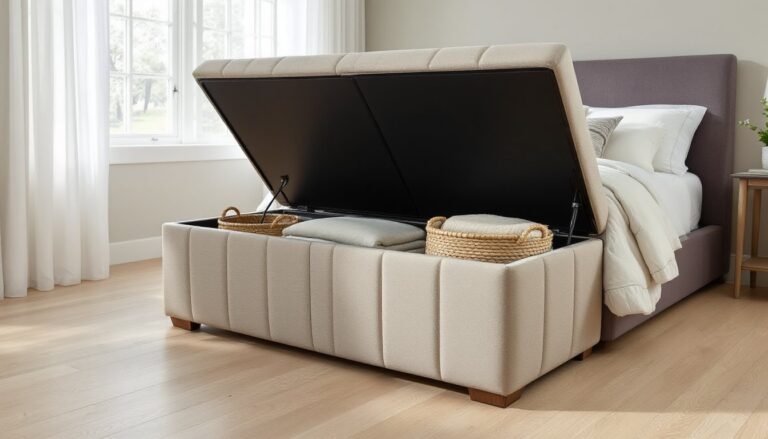
Storage benches or stools with lift-top seats provide a place to sit while offering hidden compartments for towels, toilet paper, or cleaning supplies. Choose moisture-resistant materials like sealed wood, metal, or plastic: avoid upholstered benches unless they’re treated with a water-resistant finish.
A rolling cart tucked beside the vanity or toilet can hold toiletries, hair tools, or extra linens. Carts with narrow profiles (10-12″ wide) fit into tight gaps and can be pulled out as needed. Look for rust-resistant finishes like powder-coated steel or plastic if humidity is a concern, and many modular storage systems can be adapted for bathroom use.
Smart Organization Hacks for Under the Sink
The cabinet under the bathroom sink is notoriously awkward. Plumbing pipes eat up the middle, and the space around them often becomes a black hole for half-empty bottles and tangled hair dryers.
Stackable bins or pull-out drawers corral the chaos. Measure the interior dimensions first, most under-sink cabinets are 18-24″ wide but vary in depth. Use bins or drawer units that fit around the P-trap and supply lines. Clear acrylic bins let you see what’s inside: tiered organizers maximize vertical space.
Tension rods installed vertically on either side of the pipes create slots for storing spray bottles. Mount them between the cabinet floor and the top shelf (if present) and hang bottles by their trigger handles.
Another pro move: mount a small wire basket or caddy to the inside of the cabinet door using adhesive hooks or small screws. This is perfect for sponges, gloves, or small cleaning tools. Make sure the basket clears the sink basin when the door closes.
For deeper cabinets, a lazy Susan or turntable placed on the cabinet floor brings back-of-the-cabinet items into easy reach. Look for non-slip surfaces to prevent bottles from sliding during rotation, and common under-sink organizers have been shown to reduce clutter significantly.
If plumbing permits (and the vanity isn’t wall-hung), consider a pull-out shelf kit. These mount to the cabinet sides and slide forward on metal glides, giving full access to the back. Installation requires a drill and screws: follow the manufacturer’s template for placement.
Corner and Niche Solutions to Reclaim Wasted Space
Corners are the awkward cousins of bathroom design, often ignored, but full of potential.
Corner shelves take advantage of the 90-degree junction where two walls meet. Floating corner shelves (triangular or quarter-round) mount with hidden brackets and provide landing spots for soap, candles, or small plants. Glass shelves are a popular choice for a light, airy look: make sure brackets are rated for the weight of glass plus contents.
For shower corners, tension-pole caddies extend from floor to ceiling and hold multiple baskets without drilling. They’re adjustable and work in most standard shower heights (typically 72-96″). Rust-resistant finishes like stainless steel or coated aluminum are essential in wet environments.
Built-in corner niches in tiled showers offer the cleanest look. These are best installed during a remodel or new build when you have access to framing. A niche is essentially a box framed between studs (or built out if studs aren’t aligned) and waterproofed before tiling. Use a preformed niche insert (available in plastic, foam, or stainless steel) to simplify waterproofing and ensure a proper slope for drainage.
Outside the shower, a corner vanity or corner sink can free up wall space in a tight layout. These are smaller than standard vanities (often 24″ on each wall side) and work well in powder rooms or three-quarter baths. They require angled plumbing, so factor that into installation if you’re retrofitting.
Corner baskets or bins placed on the floor behind the door or beside the toilet hold toilet paper, magazines, or rolled towels. Wicker, wire, or plastic bins all work: choose based on your bathroom’s humidity level and style, and many designers on Apartment Therapy recommend corner solutions for tight spaces. Also, sleek minimalist organizers can enhance both form and function.
Conclusion
A tiny bathroom isn’t a lost cause, it’s a design challenge with dozens of workable solutions. By using vertical space, activating dead zones, and choosing multi-functional fixtures, it’s possible to store everything without sacrificing elbow room. Start with the easiest wins (floating shelves, door hooks, under-sink organizers) and work up to more involved projects like recessed niches or wall-hung vanities. Measure twice, anchor into studs, and don’t skip the prep work. The payoff is a bathroom that feels twice its actual size and actually holds everything you need.