Table of Contents
ToggleThe entryway is the first impression of any home, yet it often becomes a dumping ground for shoes, bags, and clutter. An entryway cabinet with shoe storage transforms that chaos into a functional, organized space. Whether dealing with a cramped apartment foyer or a sprawling mudroom, the right cabinet solves two problems at once: it hides everyday mess and gives each pair of shoes a dedicated spot. With options ranging from sleek modern benches to traditional hall trees with cubbies, choosing the right piece means understanding how the household actually uses the space, not just how it looks in a catalog photo.
Key Takeaways
- An entryway cabinet with shoe storage eliminates clutter, prevents tripping hazards, and protects footwear from dust and damage in a dedicated, organized space.
- Choosing the right shoe storage cabinet requires assessing household needs, measuring entryway dimensions, and prioritizing configuration features like tilt-out bins or cubbies that match daily usage patterns.
- Solid wood cabinets offer longevity and refinishability, while engineered wood is budget-friendly but less durable; sealed finishes and ventilation features are essential for moisture control and odor prevention.
- Multi-functional designs combining seating, hooks, mirrors, and shelving maximize space efficiency, making them ideal for families and smaller entryways.
- Store-bought ready-to-assemble cabinets are practical for most homeowners and renters, while DIY projects suit those with tools and skills who need custom dimensions for oddly shaped spaces.
- Proper organization using shelf dividers, seasonal rotation, and removable trays keeps the entryway cabinet functioning effectively and prevents overcrowding that damages shoes.
Why Every Home Needs an Entryway Cabinet With Shoe Storage
Shoes scattered across the entryway floor aren’t just an eyesore, they’re a tripping hazard and a source of tracked-in dirt. An entryway cabinet with dedicated shoe storage keeps footwear contained and simplifies daily routines. No more hunting for the matching sneaker or stepping over boots on the way to the door.
From a practical standpoint, storing shoes in a closed cabinet reduces dust accumulation and protects footwear from pets, sunlight, and general wear. Open shoe racks work fine in a garage or mudroom, but entryways benefit from cabinets that hide clutter behind doors or in tilt-out bins. This is especially important in smaller homes where the entryway doubles as part of the living space.
Beyond organization, an entryway cabinet sets the tone for the rest of the home. A well-chosen piece signals that the homeowner values both function and aesthetics. It’s the first thing guests see, and a tidy, intentional entryway makes a stronger impression than a pile of shoes by the door.
In homes with multiple occupants, shoe storage becomes a necessity. A family of four can easily generate eight to twelve pairs of everyday shoes, plus seasonal footwear. Without a designated system, shoes migrate to bedrooms, closets, and even the kitchen. A cabinet in the entryway establishes a clear boundary: shoes stay here, not everywhere.
Top Features to Look for in an Entryway Shoe Cabinet
Storage Capacity and Configuration
The first question to ask: how many pairs of shoes does the household actually need to store? A single person or couple might get by with a slim cabinet holding six to eight pairs, while families require cabinets with compartments for twelve or more pairs. Count current footwear, then add a margin for seasonal rotation, winter boots take more space than sandals.
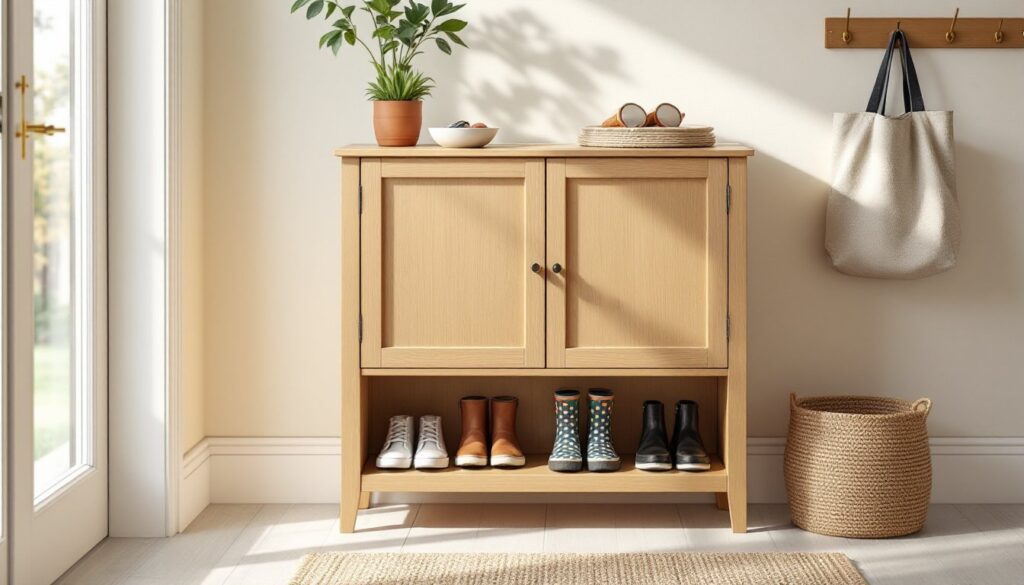
Configuration matters as much as capacity. Tilt-out bins work well for everyday shoes like sneakers and flats, keeping them accessible without requiring much floor space. These cabinets typically measure 12 to 18 inches deep and mount against the wall. Cubbies or open shelving inside a closed cabinet door offer visibility and airflow, which helps prevent odors. For households with kids, lower cubbies make it easier for children to put away their own shoes.
Some cabinets combine shoe storage with additional features: hooks for bags and coats, a top surface for keys and mail, or a bench seat for putting on shoes. Multi-functional designs make sense in tight entryways where every square foot counts. Just make sure the shoe compartment isn’t sacrificed for aesthetics, if it only holds four pairs, it won’t solve the clutter problem.
Measure the entryway before shopping. A cabinet that’s too deep will block traffic flow, while one that’s too narrow might wobble or tip. Standard entryway cabinets range from 24 to 48 inches wide and 12 to 18 inches deep. Anything deeper encroaches into walkways unless the entryway is unusually spacious.
Material and Durability Considerations
Entryways see heavy use, so the cabinet needs to withstand daily wear. Solid wood cabinets (oak, maple, pine) offer longevity and can be refinished if they get scratched or dinged. They’re heavier, which adds stability, but also drive up cost. Expect to pay more for hardwood, especially if it’s domestically sourced.
Engineered wood (MDF or particleboard with veneer) costs less and resists warping in humid climates, but it won’t hold up as well to impacts. A low-quality MDF cabinet might sag or chip within a year if shoes are tossed in carelessly. If going this route, look for cabinets with reinforced shelves and thicker panels (at least ¾ inch).
Metal cabinets are durable and suit industrial or modern aesthetics, but they’re less common for residential entryways. They work well in mudrooms or garages where the focus is pure function over style. Metal won’t scratch as visibly as wood, but dents are permanent.
Finish matters for maintenance. Sealed or painted surfaces clean up easily with a damp cloth, which is essential in an entryway where dirt and moisture are constant. Raw or lightly stained wood looks great initially but requires more upkeep to prevent water rings and scuffs.
Ventilation is an overlooked feature. Shoes generate odors, especially athletic footwear. Cabinets with slatted shelves, perforated backs, or small vent holes allow air circulation and reduce mustiness. Solid, sealed compartments trap moisture and smells, fine for dress shoes worn occasionally, less ideal for daily sneakers.
Best Entryway Cabinet Styles for Different Spaces
Narrow console cabinets work in tight entryways, hallways, or apartment foyers where depth is limited. These typically measure 10 to 12 inches deep and mount against the wall or stand on slim legs. Many include a single tilt-out shoe bin and a top surface for mail or decor. They won’t store a family’s worth of footwear, but they’re ideal for a couple or anyone prioritizing space efficiency.
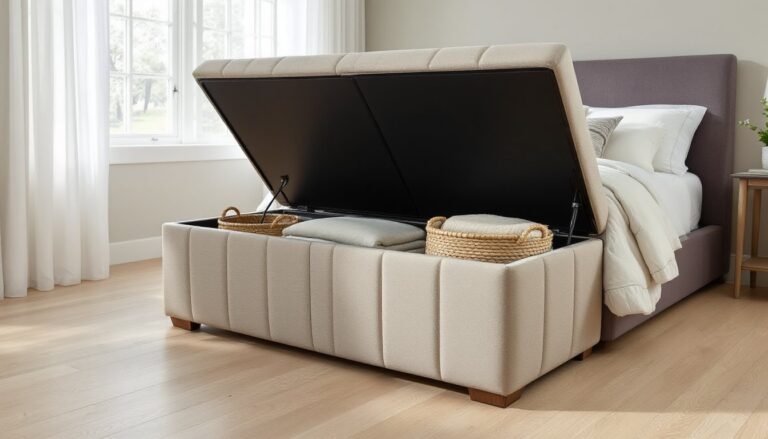
Bench-style cabinets combine seating with storage underneath. The bench seat lifts to reveal a compartment for shoes, or the space beneath is divided into cubbies. This style suits families with young kids or anyone who needs a place to sit while putting on shoes. Look for benches with reinforced lids or seats, cheap hinges fail quickly under repeated use. Weight capacity should be clearly marked: a well-built bench supports 250 to 300 pounds.
Hall trees are vertical units that integrate coat hooks, a mirror, a shoe cabinet, and sometimes a bench. They’re space-efficient in the sense that they stack functions vertically rather than spreading them across multiple pieces of furniture. But, they require wall clearance and aren’t ideal for very low-ceilinged or narrow entryways. Hall trees often come in traditional or farmhouse styles, so they may clash with modern or minimalist decor.
Freestanding cabinets with enclosed doors offer the most storage but require more floor space. These resemble small armoires or credenzas and can hold a dozen or more pairs of shoes across multiple shelves. They’re a good fit for larger entryways or mudrooms where concealment is a priority. Many homeowners interested in home gym storage solutions apply the same principles here: vertical space and enclosed compartments keep gear organized and out of sight.
Built-in or custom cabinets make sense if the entryway has awkward dimensions, too narrow, too wide, or with obstacles like radiators or outlets. A carpenter can build a cabinet that fits the exact footprint and matches existing trim or cabinetry. This is the most expensive option but delivers a cohesive, finished look. Expect to pay for both materials and labor: custom work starts around several hundred dollars and scales quickly.
How to Maximize Your Entryway Cabinet Organization
Even the best cabinet fails if it’s not organized. Start by sorting shoes into categories: daily wear, seasonal, and occasional. Daily shoes get the most accessible spots, eye level or in tilt-out bins. Seasonal boots and sandals can go on higher or lower shelves.
Use shelf dividers or small bins inside the cabinet to prevent shoes from piling on top of each other. Fabric bins work for kids’ shoes or lightweight sandals. For heavier footwear, rigid plastic dividers hold their shape better. Some homeowners appreciate home organization tips that emphasize vertical dividers to keep pairs upright and visible.
Label compartments if the household includes kids or multiple adults sharing the cabinet. Simple adhesive labels or chalkboard tags clarify whose shoes go where, reducing the “whose sneakers are these?” confusion. It’s a small step, but it keeps the system running.
Rotate shoes seasonally. In winter, move sandals and flip-flops to a closet or basement storage, freeing up prime cabinet real estate for boots and cold-weather footwear. Reverse the process in spring. This prevents overcrowding and makes it easier to find what’s needed.
Add a tray or mat at the bottom of the cabinet to catch dirt and moisture. A removable plastic or rubber tray can be pulled out and cleaned, protecting the cabinet’s interior from grime. This is especially useful in snowy or rainy climates where shoes track in water.
Don’t overstuff. If the cabinet holds twelve pairs comfortably, don’t cram in fifteen. Shoes jammed into tight spaces get damaged, and the cabinet doors won’t close properly. If running out of room, reassess what’s stored there, dress shoes worn once a year can live in a bedroom closet instead.
DIY vs. Store-Bought: Making the Right Choice
Building an entryway shoe cabinet from scratch offers customization but demands time, tools, and skill. A basic cabinet requires a table saw or circular saw, drill, measuring tape, wood glue, screws, and sandpaper. Intermediate woodworkers can knock out a simple cabinet in a weekend, while beginners should expect a learning curve and possible mistakes.
Plans are available from woodworking project sites that cater to DIY builders, offering free blueprints for benches, cubbies, and tilt-out bins. These plans typically call for ¾-inch plywood or pine boards, which cost $50 to $150 depending on grade and region. Add hardware, finish, and fasteners, and material cost runs $100 to $250 for a mid-sized cabinet.
The payoff: a cabinet that fits the exact space and matches the home’s style. Custom dimensions matter in oddly shaped entryways where standard furniture doesn’t fit. DIY also allows for personalization, extra hooks, a specific finish, or reinforced shelves for heavy boots.
The downside: time and skill barriers. Cutting dados for shelves, ensuring square corners, and mounting doors properly require precision. A poorly built cabinet sags, wobbles, or doesn’t close right. If the builder lacks a workshop or the necessary tools, the project becomes frustrating quickly. Those exploring DIY furniture plans will find plenty of beginner-friendly options, but entryway cabinets with doors and compartments sit at the intermediate level.
Store-bought cabinets save time and come with hardware, instructions, and a predictable outcome. Ready-to-assemble (RTA) options from major furniture retailers cost $100 to $400 for most styles. Assembled and delivered cabinets run higher, sometimes $300 to $700, but eliminate the build step entirely.
Quality varies widely among store-bought options. Check the thickness of panels (¾-inch minimum), the sturdiness of hinges and drawer slides, and customer reviews for assembly complaints. Cabinets with pre-drilled holes and labeled parts assemble faster than those requiring guesswork.
For renters or anyone planning to move, store-bought makes more sense. A built-in or heavy custom cabinet isn’t easily relocated, while a freestanding piece can move to the next home.
Bottom line: DIY suits homeowners with tools, skills, and time who want a perfect fit. Store-bought works for everyone else, especially if the entryway fits standard furniture dimensions. There’s no wrong choice, just the one that matches the project scope and the builder’s comfort level.