Table of Contents
ToggleSmall bedrooms and tight spaces don’t have to mean sacrificing style or functionality. A white twin bed with storage delivers both, clean lines that brighten a room while hiding clutter, shoes, linens, or off-season clothes underneath. Whether you’re furnishing a kid’s room, a guest bedroom, or a studio apartment, these beds maximize every square inch without the bulk of a dresser or the expense of custom cabinetry. White finishes keep things light and versatile, pairing with virtually any color scheme or décor style. And the storage? It’s not just convenient, it’s a game-changer for anyone tired of tripping over bins or stuffing belongings into an overstuffed closet.
Key Takeaways
- A white twin bed with storage maximizes space in small bedrooms by combining sleeping surface with built-in storage, eliminating the need for bulky dressers and freeing up floor space.
- White finishes reflect light to make rooms feel larger and act as a neutral backdrop that adapts to changing décor styles without clashing with other furnishings.
- Storage options vary in accessibility: drawer beds offer daily convenience, hydraulic-lift platforms provide space-efficient storage for bulky items, and bookcase headboards maximize vertical storage without consuming floor space.
- Solid wood frames handle weight better and last longer than engineered wood, but engineered options are more affordable; always verify weight limits and check reviews for sagging or cracked slats.
- Proper installation includes measuring total room clearance (accounting for drawer pull-out space), anchoring tall bookcase headboards to walls to prevent tip-overs, and using drawer dividers to prevent overstuffing.
- White twin beds with storage should be styled with textured bedding, subtle color accents, and appropriate lighting to avoid a cold or sterile appearance while maintaining the room’s functionality.
Why Choose a White Twin Bed with Storage?
White twin beds with storage tackle two common headaches at once: limited floor space and not enough room for belongings. In compact bedrooms, think kids’ rooms, dorms, or basement guest quarters, a twin footprint is often the only option that leaves enough clearance to walk around comfortably. Adding built-in storage eliminates the need for bulky dressers or freestanding shelving units that eat up precious real estate.
The white finish isn’t just trendy. Light colors reflect natural and artificial light, making small rooms feel larger and airier. White also acts as a neutral backdrop, so you’re not locked into a specific theme: swap out bedding, wall art, or rugs, and the bed adapts without clashing. Parents appreciate this flexibility as kids’ tastes evolve from dinosaurs to astronomy.
From a build-quality standpoint, most storage beds in this category are constructed from engineered wood (MDF or particleboard) with a painted or laminate white finish. Look for models with solid-wood slat support rather than thin metal rails, slats distribute weight more evenly and reduce squeaking. Some higher-end options use solid pine or hardwood frames with a white painted or pickled finish: these handle heavier loads and last longer, but expect to pay 30–50% more.
Storage beds also simplify cleaning. Instead of dust bunnies breeding under an open bed frame, drawers or cubbies keep the floor clear. If you’ve ever tried to vacuum around legs of a traditional bed in a cramped room, you’ll appreciate the difference.
Types of Storage Twin Beds in White
Not all storage twin beds are created equal. The type of storage you choose depends on what you’re stashing, how often you need access, and whether you’re willing to lift a mattress or pull a drawer.
Drawers and Underbed Storage
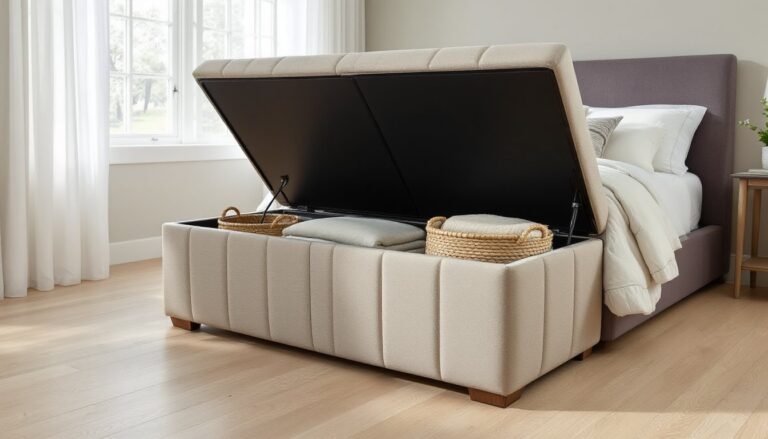
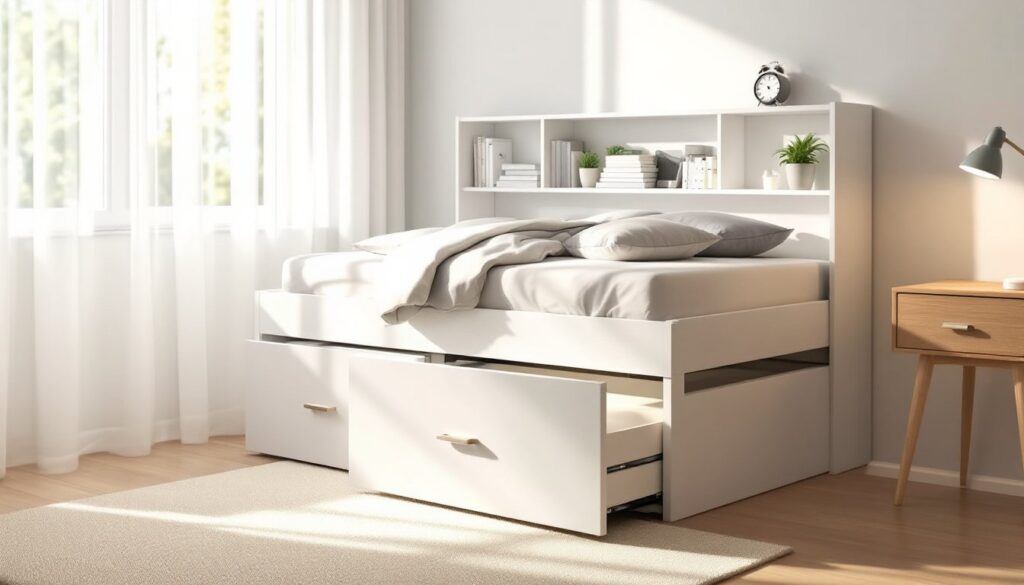
Drawer-style storage is the most popular option. Beds typically come with three to six drawers on one or both sides, mounted on metal glides (ball-bearing glides are smoother and more durable than plastic). Some models feature captain’s-style platforms with drawers accessible from the footboard or sides, plus a hydraulic-lift storage compartment under the mattress for bulkier items like comforters or luggage.
When shopping, check drawer depth and width. Many budget models offer shallow drawers (4–6 inches deep) that hold shoes or folded T-shirts but won’t fit thick sweaters or board games. Mid-range beds often provide 8–10-inch-deep drawers, deep enough for blankets or toys. Also confirm whether drawers sit on the floor or are integrated into the frame. Floor-sitting drawers can snag on carpet or require clearance adjustments: integrated units are sturdier but harder to repair if a glide breaks.
Trundle-style storage is another underbed option, where a rolling platform pulls out from beneath the bed. Some trundles hold a second mattress for sleepovers: others are fitted with shelves or open bins. If you’re building your own, the Farmhouse Storage Bed with Drawers plan offers a solid DIY foundation with optional drawer configurations.
One heads-up: drawer beds add height. A typical platform with drawers sits 18–24 inches off the floor (compared to 12–14 inches for a standard frame). That can be awkward for toddlers or anyone with mobility issues. Test the height before buying, or plan to use a step stool.
Bookcase Headboards and Shelving
Bookcase headboards mount shelves or cubbies directly behind the mattress, perfect for alarm clocks, books, or charging cables. Most are 10–12 inches deep and stand 36–48 inches tall, creating vertical storage without taking up floor space. Open cubbies work best for frequently used items: closed cabinets keep clutter out of sight but require hinges that can loosen over time if the bed gets bumped.
Some designs combine a bookcase headboard with underbed drawers, a white twin bed frame with storage on both ends. This setup is ideal for a kid’s room where you’re juggling clothes, toys, school supplies, and books. Just be mindful of total weight: a fully loaded bookcase headboard can make the bed top-heavy. Secure it to the wall with L-brackets and appropriate anchors (toggle bolts for drywall, lag screws into studs). Building codes don’t usually mandate anchoring furniture, but the Consumer Product Safety Commission recommends it to prevent tip-overs, especially in homes with young children.
Another option is side-rail shelving, where narrow shelves or pockets attach to the long sides of the bed frame. These are less common but handy for water bottles, reading glasses, or a small tablet. They do reduce clearance between the bed and adjacent furniture, so measure carefully if space is tight.
How to Select the Right White Storage Twin Bed for Your Space
Start by measuring the room, not just the bed footprint, but also clearance for drawers, doors, and walking paths. A twin bed is nominally 39 inches wide by 75 inches long, but frames add 2–4 inches on each side for railings and hardware. If the bed has side-mounted drawers, add another 18–24 inches of pull-out space. Sketch a quick floor plan or use painter’s tape on the floor to mock up dimensions before you buy.
Next, assess your storage needs. If you’re mostly stashing seasonal clothes or extra bedding, a hydraulic-lift platform (which lifts the entire mattress to reveal a cavernous compartment) may be more efficient than drawers. Lifts are easy to operate, most use gas springs rated for thousands of cycles, but they do require lifting the mattress every time you access storage, so they’re less convenient for daily-use items. If you need frequent access, prioritize drawer or trundle designs.
Material quality matters more than you’d think. Solid wood frames (pine, oak, or birch) handle weight better and can be sanded and repainted if the finish chips. Engineered wood (MDF or particleboard) is lighter and cheaper but vulnerable to moisture and heavy loads, don’t exceed the manufacturer’s weight limit (usually 200–300 pounds for twin beds). Check reviews for complaints about sagging or cracked slats: that’s a red flag for poor internal support.
For DIYers comfortable with a saw and drill, building your own is an option. Plans from resources like Fix This Build That and The Handyman’s Daughter walk through cut lists, joinery, and finish options. Expect to spend $150–250 on materials (pine or poplar, glides, hardware, paint) and a weekend of work. Building yourself lets you customize drawer sizes, adjust height, and choose eco-friendly finishes, but it requires a miter saw or circular saw, a drill, clamps, and some patience for square assembly.
Finally, consider assembly. Most flat-pack storage beds require 1–2 hours to assemble with an Allen wrench and a Phillips screwdriver. Read reviews for mentions of missing hardware, misaligned holes, or confusing instructions. If you’re not handy, some retailers offer assembly services for $75–150, worth it if you’re short on time or tools.
Styling Your White Twin Bed with Storage
White beds are blank canvases, but they can look stark or sterile without thoughtful styling. Start with textured bedding, linen duvet covers, waffle-weave blankets, or quilted bedspreads add depth and warmth. Layer pillows in varying sizes (standard, Euro, lumbar) for a finished look without veering into hotel-bed territory.
If the room skews modern or Scandinavian, keep accessories minimal: a single piece of wall art above the headboard, a small potted plant on a bookcase shelf, and maybe a neutral area rug to anchor the space. For farmhouse or coastal styles, consider distressed wood nightstands, woven baskets in open cubbies, or rope-handled drawer pulls to add character.
Color accents prevent the all-white look from feeling cold. Navy, charcoal, or forest green bedding works well for a sophisticated vibe: pastels (blush, mint, butter yellow) suit kids’ rooms or cottage aesthetics. Avoid overly busy patterns if the bookcase headboard is packed with books and knickknacks, too much visual noise makes small rooms feel cluttered.
Lighting matters, too. If the bed lacks a headboard or has only shallow shelves, a swing-arm wall sconce mounted beside the bed provides task lighting without taking up nightstand space. Install it 18–24 inches above the mattress and about 6 inches out from the headboard edge for comfortable reading. Hardwire it into an existing junction box if you’re renovating, or use a plug-in model with a cord cover to keep things tidy.
For rooms with underbed drawers, resist the urge to overstuff them. Drawers packed to the brim are hard to open and put stress on glides. Use drawer dividers or fabric bins to keep contents organized, nobody wants to rummage through a tangled mess of socks and chargers at 6 a.m.
If you’re working with a full size storage bed in another room, many of these styling principles apply equally well, just scaled up for the larger footprint.
Conclusion
A white twin bed with storage solves real problems: cramped quarters, overflowing closets, and the need for furniture that doesn’t lock you into one décor style. Whether you opt for drawers, lift platforms, or bookcase headboards, measure your space, prioritize quality materials, and don’t skip anchoring tall pieces to the wall. With a little planning, you’ll end up with a bed that’s hardworking, good-looking, and built to last.