Table of Contents
ToggleBedrooms are shrinking, but storage needs aren’t. An upholstered queen bed with storage combines comfort, style, and function, solving the perennial problem of where to stash extra bedding, seasonal clothes, or rarely used gear without cluttering your space. These beds replace bulky dressers and free up precious floor area while adding a soft, finished look to the room. Whether someone’s dealing with a cramped master bedroom or simply wants smarter furniture, an upholstered storage bed delivers real-world solutions wrapped in fabric, foam, and smart engineering.
Key Takeaways
- An upholstered queen bed with storage saves 15 to 25 square feet of floor space by combining a bed frame and chest of drawers, making it ideal for small bedrooms and urban apartments.
- Drawer storage beds work best for frequently accessed items and require 20 to 24 inches of side clearance, while hydraulic lift beds maximize capacity for seasonal storage but need replacement gas struts every 5 to 7 years.
- Choose upholstered fabrics with a Martindale rub count of 15,000 or higher for durability, and opt for stain-resistant performance fabrics if you have kids or pets.
- Proper organization using clear bins, vacuum-seal bags, and labeled compartments transforms storage potential into functional space for off-season clothing, bedding, and household gear.
- Verify weight capacity (typically 500 to 800 pounds), confirm slat spacing of 3 inches or less, and ensure the headboard detaches for easy assembly and movement through doorways.
Why Choose an Upholstered Queen Bed With Storage?
An upholstered queen bed with storage does double duty. It replaces both the traditional bed frame and a chest of drawers, saving anywhere from 15 to 25 square feet of floor space, critical in urban apartments or smaller homes. The upholstered headboard and side rails add a layer of comfort and visual warmth that metal or wood frames can’t match, especially when someone’s reading in bed or needs a padded surface to lean against.
Storage beds eliminate the wasted vertical space beneath the mattress. A standard bed frame leaves 6 to 12 inches of dead air underneath: storage beds reclaim that volume with drawers or lift-up compartments that can hold 10 to 30 cubic feet of gear. That’s enough room for off-season clothing, extra pillows, camping equipment, or anything that doesn’t need daily access.
Upholstered models also dampen sound better than hard frames. Fabric and padding absorb noise from shifting weight, making them quieter for light sleepers or shared bedrooms. The padded frame also protects walls from scuffs if the bed sits tight against drywall, a small but real benefit in rental units where security deposits matter.
Finally, upholstered storage beds simplify interior design. They come in dozens of fabric options, linen, velvet, polyester, chenille, and colors that coordinate with existing decor, eliminating the need to match wood tones or deal with cold metal finishes.
Types of Storage Options in Upholstered Queen Beds
Not all storage beds work the same way. The two main types, drawer storage and hydraulic lift storage, offer distinct advantages depending on room layout and what needs to be stored.
Drawer Storage Beds
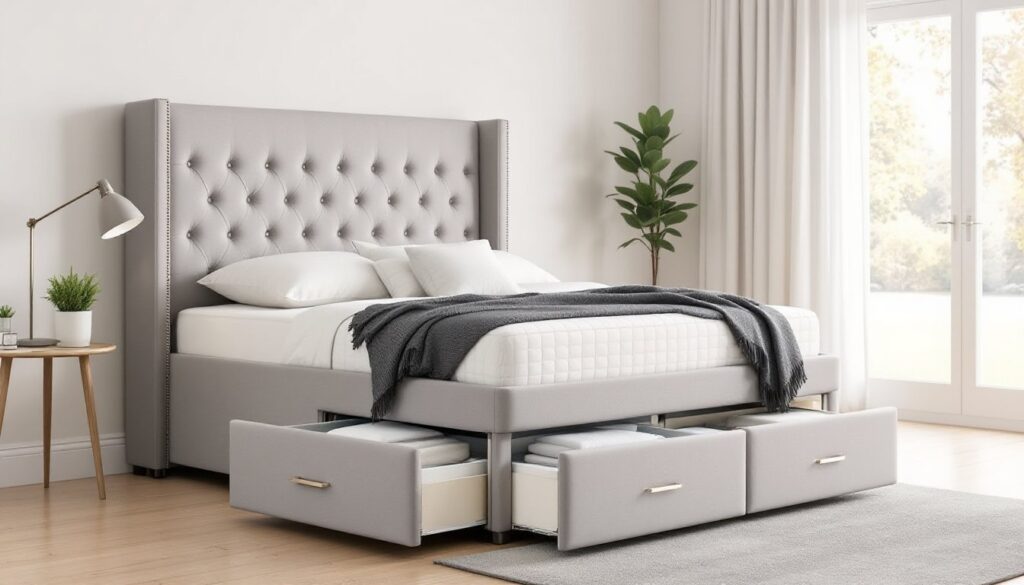
Drawer storage beds feature pull-out drawers built into the base, typically running along one or both sides. Most queen models include two to four drawers, each measuring roughly 24 to 30 inches wide and 6 to 10 inches deep. These drawers slide on metal glides or wooden runners, and higher-end models use ball-bearing slides for smoother operation and heavier loads.
Drawer beds work best in rooms with adequate clearance on at least one side, plan for an extra 20 to 24 inches of space beyond the bed frame to fully extend the drawers. They’re ideal for frequently accessed items like pajamas, bed linens, or workout gear. Some designs place drawers at the footboard instead of the sides, which can save lateral space but may require kneeling to access.
One trade-off: drawer mechanisms reduce the overall storage volume compared to lift beds because the drawer boxes and slides take up internal space. Expect to store bulkier, less-organized items in lift beds and neatly folded clothing or smaller objects in drawer models.
Hydraulic Lift Storage Beds
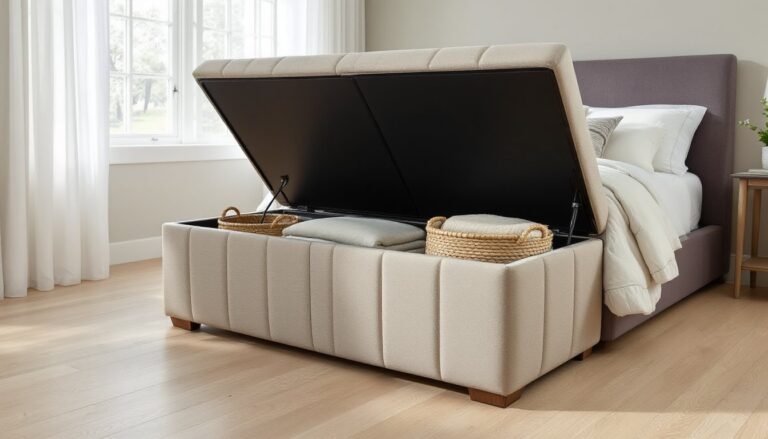
Hydraulic (or gas-lift) storage beds hinge the entire mattress platform upward, revealing a large, open compartment beneath. These beds use gas struts, similar to those in car hatchbacks, to assist lifting, so one person can raise a queen mattress and platform weighing 100-plus pounds with minimal effort.
Lift beds maximize storage capacity. The compartment spans the full footprint of the bed (roughly 60 inches by 80 inches for a queen) and typically offers 10 to 14 inches of vertical clearance. That’s enough to store suitcases, ski equipment, bulky comforters, or even small furniture items like folding chairs.
They’re also space-efficient in tight quarters because they require no side or foot clearance for access, just enough headroom to lift the platform. But, the mattress and all bedding must be lifted each time, so they’re less convenient for daily retrieval. Many designers recommend hydraulic beds for seasonal storage or items accessed monthly, not weekly. Design enthusiasts often highlight hydraulic lift beds as sleek solutions that blend minimalism with utility.
Safety note: gas struts lose pressure over time. Expect to replace them every 5 to 7 years depending on use frequency. Most models use standard 100N to 150N struts available at hardware stores or online for $15 to $30 per pair.
How to Choose the Right Upholstered Storage Bed for Your Space
Choosing the right bed starts with accurate room measurements. Measure the bedroom’s length and width, then subtract the bed’s footprint (a queen frame typically measures 62 to 65 inches wide by 82 to 86 inches long, including the headboard and side rails). Leave at least 24 inches of clearance on the sides for walking and, if choosing a drawer model, an additional 20 to 24 inches for drawer extension.
Next, assess ceiling height and door clearance. Upholstered storage beds with headboards can stand 48 to 54 inches tall. If the bed needs to be moved upstairs or through narrow doorways, confirm that the headboard detaches and that individual components fit through a standard 32-inch doorway when angled.
Consider the bed’s weight capacity. Most upholstered queen storage beds support 500 to 800 pounds total (mattress plus occupants). Check the manufacturer’s slat spacing, slats should be no more than 3 inches apart to prevent mattress sagging and maintain warranty coverage for memory foam or hybrid mattresses. Some budget models use only four to six slats: upgrade to frames with eight or more slats or a solid platform for better support.
Evaluate assembly requirements. Many upholstered storage beds ship flat-packed and require 1.5 to 3 hours of assembly. Hydraulic models are generally simpler (fewer moving parts), while drawer beds involve attaching slides, drawer boxes, and sometimes center support beams. If dealing with a multi-story home and limited help, consider whether the frame can be assembled in place rather than moved intact.
Finally, compare warranties and return policies. Upholstered furniture can be difficult to return once assembled, and fabric damage or staining may void coverage. Look for frames with at least a one-year warranty on structural components and gas struts.
Top Design Styles and Fabrics for Upholstered Queen Storage Beds
Upholstered storage beds come in a range of styles, from classic tufted designs to streamlined modern frames. Tufted headboards, featuring button or biscuit tufting, add traditional elegance and work well in transitional or glam bedrooms. The tufting creates texture and visual interest, but it also traps dust, so plan to vacuum seams every few weeks.
Wingback headboards borrow from classic armchair design, with side panels that angle forward. They add a sense of enclosure and work well in larger bedrooms where the bed isn’t pushed against a wall. Wingback styles tend to be taller (50+ inches) and heavier, so confirm floor load if installing on a second story in an older home.
Platform or panel styles offer clean, modern lines without extra ornamentation. These beds pair well with mid-century or Scandinavian interiors and often feature lower-profile headboards (36 to 42 inches), making them suitable for rooms with lower ceilings or large windows.
Fabric choice affects both aesthetics and durability. Linen and linen-blend fabrics are breathable and have a relaxed, lived-in texture, but they wrinkle easily and can show stains. Velvet delivers rich color and a luxe feel but attracts pet hair and shows wear patterns in high-contact areas. Polyester and microfiber blends resist stains and are easier to clean, important if kids or pets share the space. Look for fabrics with a Martindale rub count of 15,000 or higher for residential use: commercial-grade upholstery starts around 30,000 rubs.
Color impacts perceived room size. Lighter neutrals (beige, gray, soft white) reflect more light and make small bedrooms feel larger. Darker tones (charcoal, navy, forest green) add drama but can visually shrink the space, balance them with lighter walls and bedding. Publications like Architectural Digest frequently feature upholstered beds in rich jewel tones as statement pieces in spacious master suites.
For households with kids or pets, consider performance fabrics treated with stain-resistant coatings (Scotchgard, Crypton, or similar). These add 20% to 30% to the cost but can extend the bed’s lifespan significantly.
Maximizing Your Storage Bed: Organization Tips and Best Practices
Once the bed is in place, smart organization turns storage potential into actual function. Start by categorizing items by access frequency. Store daily or weekly items, like extra pillows or throw blankets, in the most accessible drawers or near the lift hinge. Seasonal gear, holiday decorations, or archived clothing can go deeper or toward the back of lift compartments.
Use clear bins or vacuum-seal bags inside the storage area. Even though the compartment is hidden, bins keep smaller items from shifting and make retrieval faster. Vacuum-sealed bags can compress bulky comforters or winter coats down to a third of their original volume, freeing up space for other items. Label each bin with a permanent marker or adhesive label, crawling under a lifted mattress to hunt for mystery boxes gets old fast.
For drawer storage beds, install drawer dividers or organizer inserts to prevent clothing from becoming a jumbled mess. Shallow dividers work well for socks, undergarments, or accessories: adjustable dividers let someone customize compartments as needs change.
Keep weight distribution in mind. Overloading one side of a drawer bed can stress the frame or cause drawers to bind. Distribute heavier items evenly across available drawers, and avoid exceeding the manufacturer’s per-drawer weight limit (usually 30 to 50 pounds).
In hydraulic lift beds, avoid storing anything that could be damaged by compression or jostling. Delicate fabrics, electronics, or breakables should go elsewhere. Also, ensure nothing blocks the gas struts or hinge mechanism, pinched items can damage the lift system or bend the platform.
Ventilation matters, especially for clothing or fabric storage. If storing textiles for months, toss in a silica gel packet or activated charcoal sachet to absorb moisture and prevent musty odors. In humid climates, check stored items every few months and air them out to prevent mildew.
Finally, rotate stored items seasonally. Swap out winter gear for summer clothes in spring, and vice versa in fall. This keeps the storage bed functional year-round and prevents the “set it and forget it” trap where items languish unused. If considering expanding bedroom storage further, a full size storage bed can offer similar benefits in guest rooms or children’s spaces.
Maintenance is minimal but important. Vacuum fabric surfaces monthly to prevent dust buildup, especially in tufted areas or seams. Spot-clean spills immediately with a damp cloth and mild upholstery cleaner, blot, don’t rub, to avoid spreading stains. Inspect gas struts and drawer slides annually: lubricate metal slides with a silicone spray if they start to stick.
Once someone has experienced the combination of comfort and utility in an upholstered queen bed with storage, going back to a standard frame feels like wasting space. These beds prove that smart design doesn’t require sacrificing style, and in a well-organized bedroom, that’s a trade-off no one should have to make. For more inspiration on storage bed designs, industry publications showcase a wide range of options that balance form and function.