Table of Contents
ToggleA California king mattress offers luxurious sleeping space, but that extra size can dominate a bedroom. The solution? A California king bed frame with storage that transforms dead space beneath the mattress into functional storage. Instead of letting 72 inches of width and 84 inches of length just hover over empty floor, these frames hide seasonal clothing, extra bedding, or off-season gear right where it’s needed. Whether dealing with a cramped master suite or simply wanting to ditch a bulky dresser, a cal king storage bed delivers square footage back to the homeowner without sacrificing comfort.
Key Takeaways
- A California king bed frame with storage reclaims 10 to 15 cubic feet of wasted under-bed space, eliminating the need for a bulky dresser or armoire while maintaining comfort.
- Choose between drawer systems for frequent access to daily-use items or hydraulic lift platforms for maximum storage capacity (20+ cubic feet) of seasonal gear and luggage.
- Proper room measurements are essential—ensure at least 20 inches of clearance for drawer models and verify that the bed’s total height (14–24 inches) won’t block windows or overwhelm the space.
- Match storage capacity to actual inventory rather than aspirations; a typical winter comforter requires 2 cubic feet while a carry-on suitcase needs 1.5 cubic feet.
- A California king storage bed frame costs $350–$1,500 depending on materials and construction quality, often saving money compared to purchasing a frame and separate dresser separately.
- During assembly, prioritize squaring the frame by measuring diagonals, installing gas struts correctly per manufacturer instructions, and confirming all slides and mechanisms operate smoothly before full load testing.
Why Choose a California King Bed Frame with Storage?
Bedroom real estate is expensive, not in dollars per square foot, but in usability. A standard California king occupies roughly 42 square feet of floor space, yet most frames waste the 10 to 15 cubic feet underneath. A cal king bed frame with storage reclaims that volume without adding another piece of furniture.
Space efficiency tops the list of benefits. Homeowners can eliminate a six-drawer dresser or bulky armoire by storing folded clothes, shoes, or luggage beneath the mattress. That’s especially valuable in condos, older homes with small closets, or rentals where built-in storage isn’t an option.
Organization improves when items have a designated spot. Out-of-season comforters, guest pillows, and extra sheets stay clean and accessible instead of crammed into a hallway linen closet. Some frames include divided compartments or separate drawers, making it easy to sort by category.
Aesthetics matter, too. A california king storage bed raises the mattress to a comfortable height, typically 18 to 24 inches off the floor, creating clean lines and hiding clutter. Unlike under-bed bins that peek out and collect dust, integrated storage stays concealed behind drawer fronts or lift panels.
Finally, these frames often cost less than buying a basic frame plus a separate dresser. Mid-range drawer storage frames run $400 to $800, while a comparable dresser alone can hit $500. The math favors the storage bed when budgets are tight.
Types of Storage Bed Frames for California King Beds
Not all storage beds operate the same way. The two dominant designs, drawer systems and hydraulic lift platforms, serve different needs and skill levels.
Drawer Storage Bed Frames
Drawer frames mount slide-out boxes along the bed’s sides or footboard. Most use ball-bearing drawer slides rated for 75 to 100 pounds per drawer, the same hardware found in quality kitchen cabinets. Expect two to six drawers per frame, depending on the model.
Pros: Drawers offer quick access without lifting the mattress. They work well for frequently used items like pajamas, workout gear, or spare blankets. Frames with divided drawers let users separate socks from shirts or winter from summer bedding. Many designs include dovetail joinery or Baltic birch drawer boxes, marks of durability worth checking before purchase.
Cons: Drawers need clearance to open, typically 18 to 24 inches on whichever side they’re installed. That rules them out for beds pushed against walls or in tight alcoves. They also reduce total storage volume compared to lift platforms, since drawer mechanisms and slide hardware occupy space. Shoppers building their own can follow free furniture plans to customize drawer count and placement.
Hydraulic Lift and Platform Storage Options
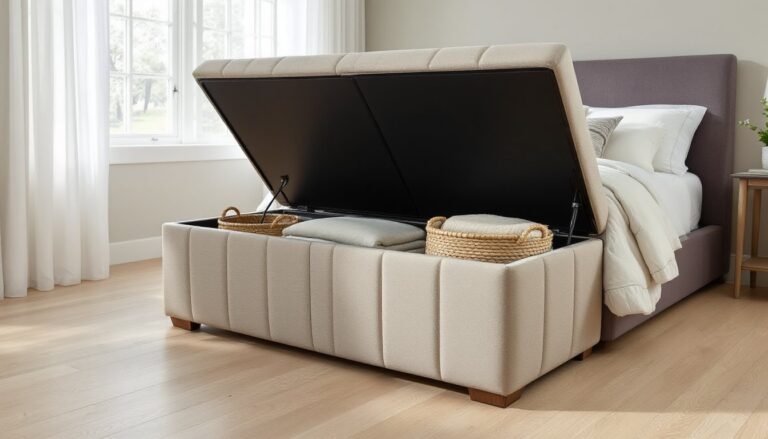
A california king platform bed with storage uses gas-lift pistons or hinges to raise the entire mattress and slat system, revealing a cavernous storage area beneath. Think of it as a giant toy chest accessed from above.
Pros: Lift platforms maximize storage volume, some hold 20 cubic feet or more, and don’t require side clearance. The bed can sit flush against walls or in corners. They’re ideal for bulky items like luggage, off-season coats, or rarely used camping gear. Higher-end models use gas struts rated for 800+ pounds, making it easy to lift a king mattress with one hand.
Cons: Accessing stored items means stripping the bedding and lifting the mattress, which isn’t practical for daily-use clothing. Cheaper models rely on manual hinges instead of gas lifts, requiring two people and risking pinched fingers or a dropped mattress. Always verify the lift mechanism’s weight rating, a California king mattress alone weighs 90 to 130 pounds, and adding bedding pushes that higher.
Some hybrid frames combine shallow drawers at the footboard with a partial lift platform at the head, splitting the difference. These work well for homeowners who want daily-access storage plus deep compartments for seasonal gear. Builders tackling a DIY version can find step-by-step woodworking guides covering both drawer and platform construction.
How to Choose the Right California King Storage Bed Frame for Your Space
Selecting a cal king storage bed starts with measuring, not just the bed, but the room itself and the items going into storage.
Room dimensions: California king frames measure approximately 72 inches wide by 84 inches long. Add the frame’s footboard and headboard, and total length often reaches 90+ inches. Measure wall-to-wall space, then subtract 24 inches for nightstands and walking paths. If drawer storage is preferred, confirm there’s 20 inches of clearance on the drawer side.
Bed height: Storage frames typically sit 14 to 24 inches from floor to mattress platform (before adding the mattress itself). Shorter frames (14–16 inches) suit modern, low-profile aesthetics but limit storage depth. Taller frames (20–24 inches) accommodate bulkier items and make getting in and out easier for older adults, but they can overwhelm rooms with low ceilings. Measure from floor to the top of the finished bed, mattress plus frame, to ensure it won’t block windows or wall art.
Storage capacity: Count what needs storing. A winter comforter compresses to about 2 cubic feet: a carry-on suitcase takes 1.5 cubic feet. Drawer frames typically offer 6 to 10 cubic feet total: lift platforms can hit 20+. Match capacity to inventory, not aspirations, overstuffed drawers jam, and overloaded lift platforms strain gas struts.
Material and construction: Solid wood frames (oak, maple, or rubberwood) handle weight better than particleboard or MDF, especially for drawer boxes. Check corner joinery, dovetails or mortise-and-tenon joints outlast pocket screws and cam locks. For platform beds, look for slat spacing no wider than 3 inches to support memory foam or latex mattresses without voiding warranties.
Assembly requirements: Most storage beds ship flat-packed and require 2 to 4 hours of assembly. Drawer frames involve installing slides and aligning drawer fronts, fiddly but manageable with a cordless drill and patience. Hydraulic lift platforms need careful gas-strut installation: mounting them upside-down or at the wrong angle renders them useless. Budget extra time and recruit a second person for holding panels square during assembly.
Budget: Entry-level frames with basic drawers start around $350. Mid-tier options with dovetail drawers or gas-lift platforms run $600 to $900. Premium solid wood frames with soft-close slides or upholstered headboards can top $1,500. Factor in delivery fees, California king frames are heavy, often 150+ pounds, and many retailers charge $75 to $150 for white-glove service.
Installation and Assembly Tips for Storage Bed Frames
Assembling a california king bed frame with storage isn’t complicated, but shortcuts lead to wonky drawers and stripped screws. Follow these steps to avoid do-overs.
Pre-assembly prep:
- Clear the space. You’ll need floor area larger than the bed itself, at least 8 by 10 feet, to lay out panels and flip sections.
- Unbox systematically. Separate hardware into labeled bags. Most kits include extras, but losing a cam lock means halting assembly mid-project.
- Acclimate materials. If the frame’s been in a cold truck or humid garage, let it sit in the bedroom for 24 hours. Wood and MDF expand and contract with temperature and humidity: assembling cold panels in a warm room can cause joints to loosen later.
Tools needed:
- Cordless drill/driver with Phillips and square bits (a manual screwdriver works but triples assembly time)
- Rubber mallet for tapping panels into alignment
- Level (2-foot or longer) to check the frame before tightening everything
- Tape measure for confirming diagonal measurements (a square frame has equal diagonals corner to corner)
- Socket wrench or hex keys (usually included, but dedicated tools speed things up)
Step-by-step assembly:
- Build the frame perimeter first. Connect the headboard, footboard, and side rails. Don’t fully tighten fasteners yet, leave them finger-tight so panels can shift into square.
- Check for square. Measure diagonally from corner to corner. If the measurements differ by more than 1/4 inch, the frame is racked. Adjust by gently pushing opposite corners until diagonals match, then tighten all fasteners.
- Install center supports and slats. California king frames need center support beams to prevent sagging, the span is too wide for perimeter rails alone. Most include a metal or wood beam running headboard to footboard, plus legs at mid-span. Slats should run perpendicular to the support beam, spaced 2.5 to 3 inches apart.
- Attach drawer slides (for drawer frames). Mark slide positions per the instructions, getting them level matters. An out-of-level slide causes drawers to drift open or bind. Use a small level or straight edge to align slides before screwing them to the frame. Test each drawer’s fit before moving to the next.
- Mount gas struts (for lift platforms). Gas struts have a “top” and “bottom” end marked by arrows or text. Installing them upside-down reverses the lift direction. Attach the strut to the frame first, then lift the platform and connect the upper bracket while a helper holds the platform open. Detailed tutorials on hardware installation can clarify tricky mounting angles.
- Level the completed frame. Place a long level across the slats in multiple directions. If the floor is uneven, shim the low legs with 1/8-inch hardboard or plastic shims, don’t rely on tightening bolts to pull a frame level, which stresses joints.
Safety notes:
- Wear gloves when handling unfinished panels: splinters and sharp edges are common.
- Keep fingers clear of pinch points when lowering hydraulic platforms. Gas struts fail occasionally, and a 100-pound mattress base dropping on a hand means a trip to urgent care.
- Use two people for lifting and flipping large sections. California king headboards and footboards can weigh 40+ pounds and are awkward to maneuver solo.
Post-assembly:
Don’t load drawers or storage compartments to capacity immediately. Run each drawer in and out a few times to seat the slides. For lift platforms, cycle the mechanism several times without the mattress to confirm smooth operation. Tighten any fasteners that loosened during handling.
If building a custom frame or modifying an existing one, a full size storage bed offers a proven template for drawer spacing and support structures that scale up to California king dimensions.
Conclusion
A california king storage bed turns wasted vertical space into practical storage without adding furniture or cluttering the room. Whether opting for drawer access or hydraulic lift platforms, the key is matching storage type to usage patterns and confirming the room has clearance for operation. Measure twice, assemble carefully, and the result is a bed that works harder than it looks.