Table of Contents
ToggleA cluttered entryway filled with scattered shoes isn’t just an eyesore, it’s a daily frustration. For homeowners with compact entryways, finding space to store footwear without sacrificing floor area or style can feel impossible. But small spaces don’t mean limited options. With the right combination of vertical solutions, multi-functional furniture, and hidden storage spots, even the tightest entryway can house a family’s worth of shoes while maintaining a clean, welcoming appearance. This guide walks through twelve practical, space-saving shoe storage solutions designed specifically for small entryways.
Key Takeaways
- Small entryway shoe storage maximizes vertical wall space and multi-functional furniture to keep compact entryways organized without consuming floor space.
- Wall-mounted racks, floating shelves, and over-the-door organizers can hold 12–36 pairs of shoes while requiring minimal installation and no permanent modifications.
- Slim shoe cabinets with cushioned tops provide both storage and seating in just 8–12 inches of depth, perfect for narrow entryways.
- Under-stair storage, recessed wall niches, and toe-kick drawers unlock hidden storage opportunities that most homeowners overlook.
- Multi-functional pieces like hall trees and lift-top benches combine shoe storage with coat hooks, mirrors, and seating to maximize utility in limited space.
Why Small Entryway Shoe Storage Matters
A functional entryway sets the tone for the entire home. When shoes pile up at the door, they create visual clutter, track in dirt and moisture, and make the space feel smaller than it actually is. Proper shoe storage keeps floors clear, protects footwear from damage, and prevents dirt from spreading throughout the house.
In small entryways, those measuring 3 feet wide or less, every square inch counts. Traditional shoe racks that consume 12 to 18 inches of floor depth simply don’t fit. The solution lies in maximizing vertical space, leveraging underutilized areas, and choosing furniture that serves multiple purposes.
Well-organized shoe storage also extends the life of footwear by providing proper ventilation and preventing crushing or deformation. For families with four or more people, strategic storage becomes even more critical. Without dedicated spots for each person’s shoes, the entryway quickly becomes impassable.
Addressing shoe storage in the planning phase of any entryway design prevents costly retrofits later. Whether renting or owning, homeowners can carry out most of these solutions without major construction or permanent modifications to walls.
Vertical Storage Solutions That Save Floor Space
When floor space is limited, the walls become prime real estate. Vertical storage solutions capitalize on the often-wasted space between the floor and eye level, keeping shoes organized without encroaching on walkways.
Wall-Mounted Racks and Cubbies
Wall-mounted shoe racks attach directly to wall studs, eliminating the need for floor space entirely. These racks typically hold 6 to 12 pairs of shoes depending on configuration. Installation requires locating studs with a stud finder and securing the unit with 3-inch wood screws rated for the total weight load.
Most wall-mounted racks feature angled shelves or horizontal bars that hold shoes at a slight tilt, allowing them to drain moisture and remain visible. The ideal mounting height places the bottom rack 6 to 8 inches off the floor, making it easy to slide shoes on and off without bending.
For homeowners seeking creative storage modifications, modular cubby systems offer flexibility. Individual cube units can be arranged in custom configurations to fit awkward wall dimensions. Each cubby typically measures 12 inches square, just enough for one or two pairs of adult shoes.
Floating shelves with a 10- to 12-inch depth work well for displaying shoes that double as decor, such as vintage boots or colorful sneakers. When installing floating shelves for shoe storage, use concealed bracket systems rated for at least 50 pounds per linear foot to handle the weight of multiple pairs.
Vertical tower racks that extend from floor to ceiling can hold 18 to 30 pairs of shoes in a footprint as small as 12 inches by 18 inches. These freestanding units don’t require wall mounting but should be secured to wall studs with furniture anchors to prevent tipping, especially important in homes with children or pets.
Over-the-Door Organizers
Over-the-door shoe organizers hook over the top of any standard interior door without tools or hardware. These fabric or clear plastic organizers feature pockets that hold individual shoes, with capacities ranging from 12 to 36 pockets per organizer.
The key limitation is door clearance. Most over-the-door organizers add 4 to 6 inches of depth to the door’s swing radius. Measure the clearance between the door and any adjacent walls or furniture before purchasing. In tight entryways, this solution works best on closet doors that open into larger spaces.
Clear pocket organizers allow quick visual identification of each pair, while fabric versions provide a cleaner aesthetic. For households managing decluttering strategies, clear pockets make it easier to rotate seasonal footwear and identify pairs that are no longer worn.
Over-the-door racks made from powder-coated steel offer a more durable alternative to fabric pockets. These feature horizontal bars or hooks that hold shoes by the heels. They handle heavier boots and work boots better than soft-sided organizers, with weight capacities up to 40 pounds when properly installed.
One often-overlooked advantage: over-the-door organizers can be moved to different doors seasonally. Winter boots can live on the coat closet door during cold months, then shift to basement or garage doors when warm weather arrives.
Multi-Functional Furniture for Shoe Storage
In small entryways, furniture that serves only one purpose is a luxury most homeowners can’t afford. Multi-functional pieces that combine shoe storage with seating, coat storage, or display surfaces deliver maximum utility in minimal space.
Slim Shoe Cabinets With Seating
Slim shoe cabinets, sometimes called shoe consoles, measure just 8 to 12 inches deep, making them ideal for narrow entryways. Unlike traditional shoe racks, these cabinets conceal footwear behind cabinet doors or tilt-out drawers, maintaining a cleaner appearance.
Tilt-out shoe cabinets feature shallow drawers that angle open to reveal shoes stored toe-up. Each drawer typically holds 3 to 4 pairs of adult shoes. A three-drawer unit stands about 42 inches tall and can store 9 to 12 pairs in a footprint of just 36 inches wide by 10 inches deep.
The top surface of a shoe cabinet doubles as a landing spot for keys, mail, and seasonal accessories. For added functionality, choose cabinets with cushioned tops that convert the unit into a bench for putting on shoes. The cushion should be at least 2 inches thick and upholstered in durable fabric like polyester blend or faux leather that resists stains and moisture.
When selecting a shoe cabinet for seating, verify the weight capacity. Budget models often max out at 150 pounds, while better-constructed units with reinforced MDF or solid wood frames handle 250 pounds or more.
For entryways with unique dimensions, ideas from small space living experts often feature benches with built-in cubbies underneath. These provide open storage for 4 to 6 pairs of frequently worn shoes while offering a comfortable seat for putting on boots.
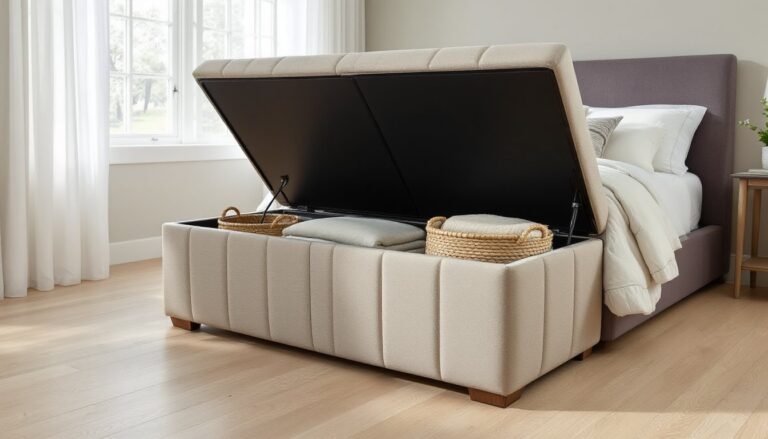
Entryway benches with lift-top storage provide concealed space for seasonal footwear or less-used pairs. The typical bench measures 36 to 48 inches wide, 14 to 18 inches deep, and 18 inches tall. The internal storage cavity holds 8 to 12 pairs depending on shoe size and how they’re arranged.
When building a custom shoe storage bench, use ¾-inch plywood for the frame and seat platform. Install soft-close hinges on lift-top designs to prevent slamming and pinched fingers. Line the interior with cedar panels to naturally repel moisture and odors.
Hall trees combine coat hooks, a mirror, a small bench, and shoe storage in a single vertical unit. These typically stand 72 inches tall and 24 to 30 inches wide. The shoe storage component usually consists of a lower shelf or small cabinet that holds 4 to 8 pairs. While not the highest-capacity option, hall trees excel in very small entryways where every function must stack vertically.
Hidden and Under-Utilized Storage Spots
The most overlooked shoe storage opportunities hide in plain sight. Under stairs, inside closets, beneath benches, and even within walls, there’s often usable space that goes completely unused.
Under-stair storage makes perfect sense for entryways adjacent to staircases. The triangular cavity beneath stairs can be retrofitted with pull-out drawers, fixed shelving, or custom cubbies. The tallest section near the staircase opening handles boots, while the narrowest end accommodates children’s shoes or sandals.
Building under-stair shoe storage requires measuring the available height at multiple points along the staircase. Most staircases rise at a 35- to 40-degree angle, creating a graduated storage zone. Install shelves in 6-inch height increments to maximize capacity.
If the under-stair area is finished with drywall, cut an access opening and frame it with 2×4 studs on 16-inch centers to match the existing wall framing. Install a simple door or leave it open with decorative baskets for a more casual look. This type of modification may require a permit in some jurisdictions if it involves cutting through structural components, so check local building codes.
Recessed wall niches between studs provide built-in shoe storage without consuming floor space. Standard stud spacing of 16 inches on center creates cavities approximately 14½ inches wide, just enough for a single pair of shoes stored sideways.
Cutting into drywall to create a niche is straightforward: locate studs, mark the opening, cut with a drywall saw, and frame the opening with horizontal blocking at top and bottom. Finish the interior with matching paint or tile. Each niche adds storage for 1 to 2 pairs of shoes. Stack two or three niches vertically for greater capacity.
Important: Never cut into load-bearing walls or remove studs without consulting a structural engineer. In most homes, interior walls perpendicular to floor joists are non-load-bearing and safe to modify, but verification is essential.
Toe-kick drawers installed beneath base cabinets or built-in benches use the 4-inch recess at floor level. These shallow drawers pull out to reveal storage for flat shoes like ballet flats, sandals, or children’s shoes. While the capacity is limited, toe-kick drawers capture otherwise wasted space.
Installing toe-kick drawers requires removing the existing toe-kick board, building a shallow drawer box (typically 3 inches tall), and mounting it on drawer slides rated for side-mount installation. The drawer front should match the existing toe-kick finish for a seamless appearance.
Behind-the-door hooks and racks don’t need to mount over the door. Wall-mounted hooks installed on the wall behind the door swing take advantage of the dead zone that exists when the door is open. This spot works well for hanging boot shapers, shoe bags, or even lightweight shoes with heel loops.
Finally, don’t overlook furniture that arrives with hidden storage potential. Ottomans, storage cubes, and even some coffee tables include internal storage that can double as entryway shoe storage when placed strategically near the door. Choose pieces with removable tops rather than hinged lids for easier access in tight quarters.