Table of Contents
ToggleA king-size mattress offers unmatched comfort, but it also eats up serious floor space. That sprawling footprint becomes even more problematic in bedrooms short on closets or when square footage comes at a premium. A storage bed frame king solves two problems at once: it supports a heavy mattress while carving out cubic feet of usable storage right where you sleep. No need for bulky dressers or underbed bins sliding around on carpet. The frame itself becomes the storage solution, keeping seasonal clothes, extra bedding, or off-season gear organized and out of sight. This guide walks through the types available, what to look for when shopping, and how to make the most of that hidden real estate.
Key Takeaways
- A storage bed frame king maximizes bedroom organization by providing 25 to 35 cubic feet of hidden storage without sacrificing floor space or adding bulk furniture.
- Choose between drawer-style frames for frequent access (requiring 18-24 inches of side clearance) or hydraulic lift frames for maximum volume and items accessed less often.
- Drawer frames need solid wood construction with ball-bearing slides rated for 50-75 pounds, while lift frames require gas struts rated for 150-200 pounds plus proper hinge alignment.
- Properly assembled storage bed frames prevent sagging by using center support beams and slats spaced no more than 3 inches apart to support the 90-150 pound weight of a king mattress.
- Store seasonal clothing, extra bedding, and bulky off-season items while avoiding electronics, documents, and temperature-sensitive goods that could be damaged in enclosed storage.
- Careful assembly with level alignment and staged fastener tightening prevents racking, squeaking, and operational issues that compromise the frame’s durability and function.
Why a King Storage Bed Frame Is a Game-Changer for Bedroom Organization
The average king bed measures 76 inches wide by 80 inches long, claiming roughly 42 square feet of floor space. That’s prime real estate in most bedrooms, and traditionally it just sits there doing one job. A storage bed frame king flips that script by adding function without sacrificing an inch of floor plan.
Drawer units or lift platforms tucked into the base can hold as much as 25 to 35 cubic feet of storage, depending on frame design. That’s equivalent to a small dresser or several plastic bins, but it’s accessible, organized, and invisible when the bed is made. For master bedrooms lacking walk-in closets or dealing with awkward layouts, this hidden capacity keeps clutter off the floor and out of sight.
Storage frames also eliminate the dust-bunny graveyard that accumulates under traditional beds. Enclosed drawer systems or lift platforms seal off the underside, making cleaning easier and protecting stored items from pet hair, moisture, and forgotten socks. If the bedroom doubles as a guest space or serves multiple functions, consolidating storage into the bed frame frees up room for seating, a workspace, or exercise equipment.
Types of King Storage Bed Frames to Consider
Drawer Storage Bed Frames
Drawer-style frames integrate pull-out compartments along one or both sides of the bed base. These typically run on metal glides or ball-bearing slides, similar to dresser hardware. Expect two to six drawers per frame, depending on whether you choose a single-sided or wrap-around design.
Drawers offer quick access without moving the mattress. You can grab what you need while the bed is made, which makes them ideal for items you reach for regularly, think extra blankets, pillows, seasonal clothing, or bedding sets. The trade-off: drawer frames require clearance on at least one side, usually 18 to 24 inches, so the drawers can slide fully open. In tight spaces or rooms where the bed sits against a wall, this limits placement options.
Construction quality matters here. Look for solid wood or plywood drawer boxes with dovetail or dado joints, not particleboard stapled together. Ball-bearing slides handle weight better than plastic glides and won’t derail when you load the drawer with heavy comforters. If you’re handy, DIY woodworking plans can guide you through building a custom drawer-style storage bed tailored to your room dimensions.
Hydraulic Lift Storage Bed Frames
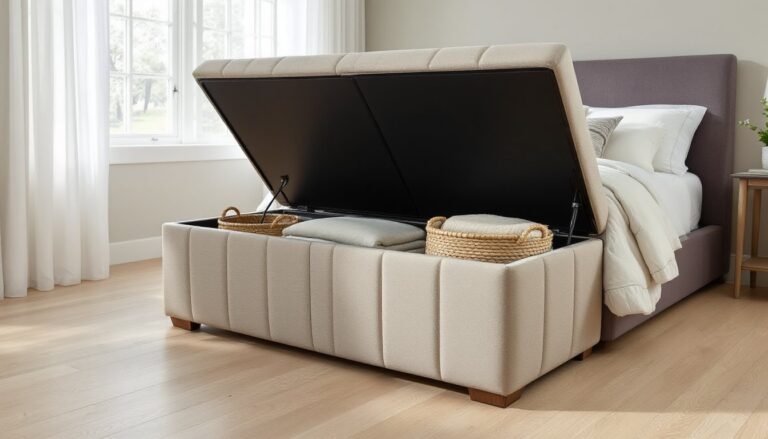
Hydraulic lift frames (also called ottoman beds or gas-lift beds) hinge at the head or foot, lifting the entire mattress platform to reveal a cavernous storage compartment underneath. Gas struts provide the lifting force, so you’re not wrestling hundreds of pounds of mattress and bedding by hand.
This design maximizes storage volume. The entire footprint under the mattress becomes accessible, often yielding 30+ cubic feet of open space. You can store bulky items like luggage, seasonal wardrobes, or spare bedding without cramming them into drawers. It’s also a smart choice for rooms where floor space is tight, no side clearance needed, since access is vertical.
The downside: you need to strip or at least partially unmake the bed to access storage. That makes lift frames better suited for infrequently accessed items. Assembly is more involved than drawer frames, and the hydraulic pistons will eventually wear out (plan on replacement every 5 to 10 years depending on use). When shopping, confirm the lift mechanism is rated for the combined weight of a king mattress plus bedding, around 150 to 200 pounds for most setups.
How to Choose the Right Storage Bed Frame for Your King Mattress
Start with room layout and clearance. Measure the space around where the bed will sit. Drawer frames need at least 18 inches of pullout room on the drawer side. Lift frames need only vertical clearance, but confirm the mattress won’t hit a low ceiling or ceiling fan when raised, add 3 to 4 feet above the bed height to be safe.
Next, consider mattress compatibility. King mattresses weigh between 90 and 150 pounds depending on construction (memory foam, hybrid, innerspring). Storage frames must support that load plus sleepers. Look for frames with a center support beam or multiple cross slats spaced no more than 3 inches apart to prevent sagging. Some frames include a bunkie board or solid platform: others require you to add one, especially for memory foam mattresses that need even support.
Material choice affects longevity and aesthetics. Solid hardwood (oak, maple, walnut) offers the best durability and can be refinished or repaired. Engineered wood (plywood, MDF) with veneer keeps costs down but won’t hold screws as well over time if you disassemble and move the bed. Metal frames with fabric upholstery are lighter and often budget-friendly, but check the gauge of the steel and the quality of stitching, cheap upholstery snags and pills quickly.
If you have a smaller bedroom, a full size storage bed frame might be a better fit, offering similar benefits in a more compact footprint. Finally, match your skill level to assembly complexity. Some frames arrive flat-packed with cam-lock fasteners and can be put together with an Allen wrench in an afternoon. Others require wood glue, clamps, and precise squaring, plan on a weekend and a second set of hands.
Installation and Assembly Tips for King Storage Bed Frames
Unbox and inventory all parts before you start. Lay out hardware in labeled groups (bolts, cam locks, dowels, slides). Missing a single washer or cam lock can stall assembly mid-project. If the frame is solid wood and arrived in winter, let the pieces acclimate to your home’s humidity for 24 to 48 hours before assembly to prevent warping or joint misalignment.
For drawer frames, install slides carefully. Mark screw holes with a pencil, predrill pilot holes with a bit slightly smaller than the screw diameter, and double-check that slides are level front-to-back. Misaligned slides cause drawers to bind or tip. Use a carpenter’s square to ensure drawer boxes are square before securing them, racking will make them impossible to close smoothly.
Hydraulic lift frames require precise hinge placement. Follow the manufacturer’s template exactly, and use a drill with a clutch setting to avoid stripping screw holes in the frame. Attach gas struts last, after confirming the platform opens and closes freely. When lifting the platform for the first time, have a helper stabilize it while you confirm the struts are seated properly in their mounting brackets.
Tighten all fasteners in stages. Snug bolts or cam locks finger-tight first, then work around the frame in a crisscross pattern, gradually bringing everything to final torque. This prevents racking and ensures joints seat evenly. Once assembled, check that the frame sits level on the floor. If it rocks, adjust with furniture shims rather than forcing it, uneven weight distribution can stress joints and cause squeaks.
For additional project ideas and step-by-step tutorials on furniture builds, woodworking communities and maker platforms offer a wealth of plans and troubleshooting advice.
Maximizing Storage Space: What to Store Under Your Bed
Seasonal clothing and bedding are natural candidates. Swap out heavy comforters for lightweight quilts as the weather changes, and rotate winter sweaters or coats into drawer storage during warmer months. Use vacuum-seal bags to compress bulky items, but avoid overpacking drawers to the point where slides strain, most drawer glides are rated for 50 to 75 pounds max.
Extra linens, pillows, and blankets fit well in lift-style frames, especially if you host guests frequently. Keep a dedicated set of sheets and pillowcases ready to go, plus a spare comforter or duvet. Label storage with a permanent marker on masking tape so you’re not guessing what’s inside when the bed is lifted.
For drawer frames, shoes, accessories, and small gear stay organized in shallow compartments. Use dividers or small bins inside drawers to prevent items from sliding around. Avoid storing anything moisture-sensitive directly against the floor side of the drawer if the bedroom sits over a basement or crawl space, condensation can wick through.
Off-season sports equipment, luggage, or hobby supplies work well in lift frames, where volume matters more than accessibility. Keep heavier items toward the center of the storage area to maintain even weight distribution and prevent the frame from tipping when the platform is raised.
Avoid storing electronics, important documents, or anything affected by temperature fluctuations under the bed. Bedrooms can get warm in summer or cold in winter, and enclosed storage doesn’t breathe like a closet. Skip food storage entirely unless it’s sealed in airtight containers, crumbs attract pests, and spills are a nightmare to clean out of drawer tracks or lift compartments.
A well-chosen storage bed frame king turns dead space into a hardworking organizational tool, whether you’re tackling a closet shortage or just streamlining a cluttered bedroom. Match the frame type to how you’ll use it, measure twice during assembly, and load it thoughtfully. Done right, it’s one piece of furniture earning its keep every single day.