Table of Contents
ToggleA cluttered workshop isn’t just frustrating, it’s a productivity killer. When tools are scattered across benches, buried in drawers, or piled on the floor, every project starts with a scavenger hunt. Tool storage cabinets solve this problem by creating a dedicated, organized system that keeps everything accessible and protected. Whether someone’s running a full-scale woodshop or just carving out a corner in the garage, the right cabinet setup transforms chaos into efficiency. This guide walks through cabinet types, selection criteria, must-have features, and organization strategies that actually work in real-world workshops.
Key Takeaways
- Tool storage cabinets eliminate workshop clutter by providing organized, dust-protected storage that increases productivity and extends tool lifespan by reducing rust and wear.
- Choose between wall-mounted cabinets for space efficiency or freestanding models for flexibility and capacity, considering your workshop size, layout, and tool collection weight.
- Mobile tool storage cabinets with heavy-duty casters (at least 3-inch swivel) bring tools directly to work areas, improving efficiency in multi-zone workshops while requiring locked wheels before drawer use.
- Prioritize adjustable shelving with 75–150 pound capacity, full-extension ball-bearing drawer slides, and proper locking mechanisms when selecting quality tool storage cabinets.
- Organize tools by task zone (electrical, carpentry, plumbing) rather than type, place frequently used items at eye level, and maintain 15–20% empty space to encourage proper tool storage habits.
- Install wall-mounted cabinets into wall studs 16 inches on center using lag bolts, and position the bottom shelf 36–42 inches high to ensure ergonomic access without straining.
What Are Tool Storage Cabinets and Why Do You Need One?
Tool storage cabinets are enclosed storage units designed specifically to house tools, fasteners, and workshop supplies. Unlike open shelving or pegboards, cabinets provide dust protection, security, and concealed storage that keeps a workspace looking clean and professional.
The core benefit is organization. A good cabinet system means every screwdriver, wrench, and specialty bit has a designated spot. This eliminates the time wasted hunting for misplaced tools and reduces the risk of damage from tools being left out or knocked around. For anyone working with power tools or precision instruments, dust protection alone justifies the investment, fine particles can wreak havoc on electronics and moving parts.
Security matters, too. Locking cabinets keep sharp tools and potentially dangerous equipment away from kids and unauthorized users. For DIYers with valuable tool collections, a locked cabinet adds a layer of theft protection, especially in shared garage spaces or workshops accessible from the outside.
Tool cabinets also extend the lifespan of equipment. Humidity, temperature swings, and dust accelerate rust and wear. Enclosed storage in a home gym storage setup or dedicated workshop creates a controlled microenvironment that keeps tools dry and functional for years longer than leaving them exposed on shelves.
Types of Tool Storage Cabinets for Every Workshop
Wall-Mounted vs. Freestanding Cabinets
Wall-mounted cabinets maximize floor space by utilizing vertical real estate. They’re ideal for smaller workshops or garages where every square foot counts. Installation requires locating wall studs, typically spaced at 16 inches on center in residential construction, and using lag bolts rated for the cabinet’s loaded weight. Most wall-mounted units hold 50–200 pounds depending on size and construction, so proper anchoring into framing (not just drywall) is non-negotiable.
These cabinets work best for lighter hand tools, fasteners, and accessories. Mount them at a comfortable working height, generally with the bottom shelf around 36–42 inches off the floor, so users don’t have to strain or stoop. Consider cabinet depth carefully, units deeper than 12 inches can protrude awkwardly in tight spaces and interfere with workbench clearance.
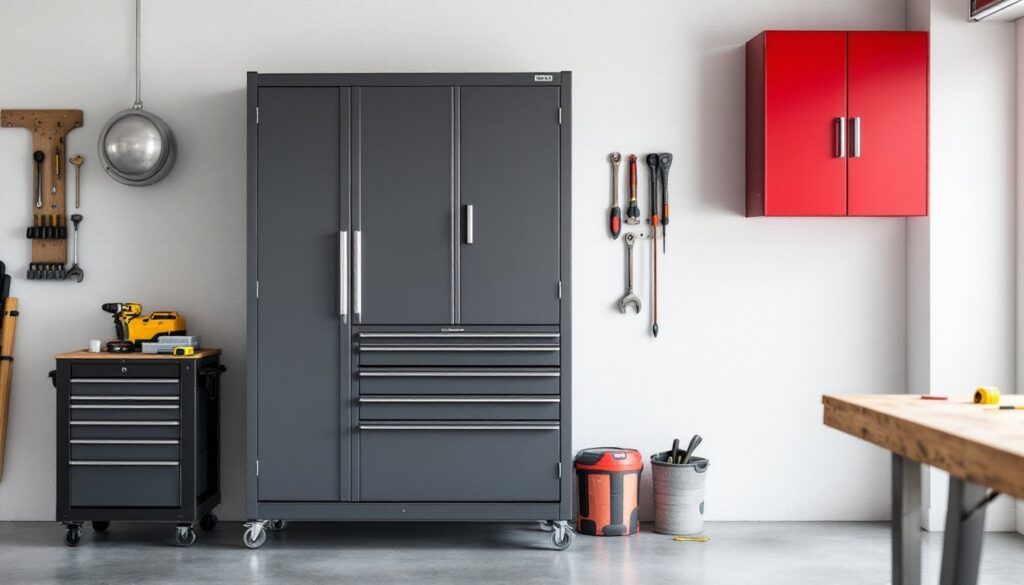
Freestanding cabinets offer flexibility and capacity. They don’t require wall modifications, which makes them perfect for renters or anyone who might reconfigure their shop layout later. These units typically range from 36 to 72 inches tall and can accommodate heavier tools like drills, sanders, and bulky power tool cases. Base cabinets with solid tops double as extra work surfaces, though the top should be at least 3/4-inch plywood or MDF to handle any real weight.
The trade-off is footprint. A standard freestanding cabinet occupies 2–4 square feet of floor space, which might not work in a compact garage storage scenario where space is already tight. For workshops doubling as parking areas, keep cabinets against walls to maintain vehicle clearance.
Mobile Tool Cabinets and Rolling Storage Solutions
Mobile cabinets bring tools to the work, not the other way around. These rolling units mount on heavy-duty casters, look for at least 3-inch swivel casters with locking mechanisms on at least two wheels. Weight capacity matters: quality mobile cabinets handle 200–500 pounds of loaded tools without wobbling or tipping.
Mobile storage shines in multi-area workshops. A woodworker might roll a cabinet from the miter saw station to the assembly bench, keeping all necessary tools within arm’s reach throughout the project. Mechanics appreciate the ability to position tools directly beside the vehicle they’re working on, as recommended by professionals at Popular Mechanics for efficient workflow setups.
Stability is the main concern. Once loaded, mobile cabinets become top-heavy, especially taller models. Always engage wheel locks before opening drawers or doors, the shifting weight can cause an unlocked cabinet to roll away or tip forward. Some manufacturers add ballast trays at the bottom for sandbags or weight plates: use them if available.
For jobsite work or home renovation storage needs, rolling cabinets with fold-down work surfaces provide a portable workstation. Just verify the casters can handle the terrain, pneumatic wheels work better on rough surfaces like gravel driveways or jobsites than hard plastic wheels.
How to Choose the Right Tool Storage Cabinet for Your Space
Start with an honest inventory. Spread out every tool that needs storage and group items by size and frequency of use. This reveals actual storage volume requirements, most DIYers overestimate cabinet needs or buy units too small for their collection.
Measure the available space carefully, accounting for door swing, drawer extension, and clearance. Cabinet doors typically swing 90 degrees, so a 24-inch-wide cabinet needs roughly 24 inches of clearance in front. Drawers extend 12–18 inches depending on depth and slide hardware. In tight quarters, consider cabinets with bifold doors or sliding doors that don’t require swing clearance.
Ceiling height limits vertical options. An 8-foot garage ceiling realistically accommodates cabinets up to 72 inches tall, leaving space above for overhead storage or ventilation. Taller cabinets risk becoming tip hazards unless anchored to walls, which brings us back to stud spacing and proper mounting hardware.
Material choice affects durability and price. Steel cabinets offer maximum durability and fire resistance, important for storing flammable materials or working with welding equipment. Gauge matters: 18-gauge steel provides good strength-to-weight balance, while 20-gauge works for lighter-duty applications. Avoid anything thinner than 22-gauge: it dents too easily. According to Family Handyman experts, steel cabinets hold up better in humid environments than particle board alternatives.
Wood cabinets fit workshops doubling as living spaces where appearance matters. Plywood construction (not particle board) holds up to real-world shop conditions. Finish matters, unsealed wood absorbs moisture and oil stains. Look for cabinets with polyurethane or lacquer finishes that clean easily and resist shop chemicals.
Heavy-duty plastic or resin cabinets resist rust and chemicals, making them ideal for damp basements or outdoor storage areas. They’re lighter than steel, which simplifies wall mounting, but check weight ratings carefully, plastic cabinets generally max out around 100 pounds per shelf.
Top Features to Look for in Quality Tool Storage Cabinets
Adjustable shelving is non-negotiable. Fixed shelves waste space by forcing tools into predetermined heights that rarely match real-world needs. Look for cabinets with shelves on 1-inch pin holes or similar adjustable systems, this allows repositioning in small increments as tool collections change.
Shelf weight capacity varies dramatically. Economy cabinets might rate shelves at 25–50 pounds, which barely handles a collection of hand tools. Quality units support 75–150 pounds per shelf. This matters when storing power tool cases, bulk fastener containers, or heavy materials like sandpaper boxes.
Drawer slides separate amateur from professional-grade cabinets. Ball-bearing slides provide smooth operation and handle heavy loads, typically 75–100 pounds per drawer. Cheaper cabinets use roller slides or friction slides that stick, bind, and fail under weight. Test drawers fully loaded before buying: they should extend completely without jamming and close with minimal effort.
Full-extension slides let users access drawer contents all the way to the back. Partial-extension slides only pull out 75% of drawer depth, leaving items in the rear unreachable. For drawers holding small parts or fasteners, this matters less, but for tool drawers where every inch counts, full extension is worth the upgrade.
Locking mechanisms range from simple cam locks (requiring a basic key) to more secure tubular or electronic locks. For most home workshops, cam locks suffice. They deter casual access and keep kids out. For valuable tool collections or commercial settings, invest in tubular locks or cabinets with reinforced lock boxes that resist prying.
Pegboard or hook backing inside cabinets creates flexible hanging storage for frequently used tools. Some manufacturers include slotted walls compatible with modular hook systems. This combines the visibility of pegboard with the protection of enclosed storage, which users implementing storage cubes systems often appreciate for versatility.
Power strips or electrical outlets built into cabinets support battery charging stations. For cordless tool users, dedicated charging zones prevent cluttered benches and keep batteries organized. Look for cabinets with surge protection rated for tool battery chargers, which draw significant current during charging cycles.
Finally, consider cabinets with pegboard doors or magnetic door panels that add bonus storage without sacrificing interior space. Door-mounted tool holders work well for frequently grabbed items like tape measures, utility knives, and pencils.
Organizing Your Tool Storage Cabinet for Maximum Efficiency
Zone tools by task, not by type. Instead of grouping all screwdrivers together, create task-based zones: electrical work tools in one area, carpentry tools in another, plumbing supplies in a third section. This approach, outlined in projects from Fix This Build That, reduces the mental load of remembering where individual tools live.
Place frequently used items at eye level (roughly 48–60 inches from the floor for most adults). Reserve top shelves for seldom-used specialty tools or seasonal items. Bottom drawers work well for heavy power tools, lifting a 15-pound circular saw from a bottom drawer beats wrestling it down from an overhead shelf.
Drawer dividers and tool foam keep contents from shifting and tools from banging together. Custom-cut foam inserts (often made from 1–2 inch polyethylene foam) create exact-fit slots for each tool. The visual inventory system instantly reveals missing tools, an empty slot means something didn’t get put back. For budget-conscious DIYers, pegboard fitted to drawer bottoms with zip-tie anchors achieves similar organization at lower cost.
Label everything. Use a label maker or clear adhesive labels on drawer fronts and shelf edges. Include size information for drill bits, socket sets, and other graduated tool sets. A label reading “Drill Bits 1/16″–1/2″” beats opening three drawers hunting for the right size.
Store small fasteners in clear containers, not coffee cans. Transparent polypropylene bins with snap lids prevent spills and let users verify contents at a glance. Stack uniform-size containers for efficient space use, storage containers with standardized dimensions maximize shelf capacity better than random boxes.
Keep cabinet contents within weight limits. Overloading shelves or drawers causes hardware failure and potential injury. Distribute weight evenly across shelves: don’t stack all the heavy items on one side, which can twist cabinet frames or pull wall-mounted units from their anchors.
Carry out a return policy: tools come back cleaned and ready for next use. Wipe saw blades, blow dust from sanders, and empty collection bags before storage. This five-minute habit prevents rust, extends tool life, and ensures the next project starts with ready-to-use equipment instead of cleanup duty.
For workshops with limited cabinet space, combine solutions. A freestanding base cabinet, wall-mounted upper cabinet, and rolling cart create a flexible system that adapts to different projects. This layered approach works especially well in home renovation projects where tool needs shift between carpentry, electrical, and finishing phases.
Finally, maintain breathing room. Don’t cram cabinets to 100% capacity. Leave 15–20% of space open for new tools, expansion, and temporary storage during active projects. Overcrowded cabinets discourage putting tools away properly, which defeats the entire purpose of organized storage.
With proper cabinet selection and organization, a workshop transforms from a frustrating jumble into an efficient space where tools stay protected, projects move faster, and every item has its place. That’s when real work happens.