Table of Contents
ToggleStorage beds solve two problems at once: where to sleep and where to stash seasonal clothes, extra bedding, or hobby gear. Wayfair’s selection includes everything from simple platform frames with drawers to hydraulic-lift models that reveal cavern-like storage underneath. These aren’t just space-savers for cramped apartments, even large bedrooms benefit from the decluttering power of built-in storage. Choosing the right one means weighing drawer count, lift mechanism, assembly complexity, and whether your floor can handle the added weight. This guide walks through the options, selection criteria, and assembly realities so you can pick a storage bed that actually works for your space and skill level.
Key Takeaways
- A Wayfair storage bed reclaims 12 to 30 cubic feet of storage space equivalent to a small closet, making it ideal for decluttering bedrooms of any size.
- Choose between platform beds with side drawers for frequent access or hydraulic lift beds for maximum capacity if you store items seasonally or annually.
- Invest in solid wood or plywood construction for durability; avoid particleboard models if you plan heavy drawer use or frequent movement.
- Measure floor clearance and weight capacity carefully—fully loaded storage beds exceed 800 pounds, and drawer-equipped models need 18–24 inches of side clearance.
- Prioritize quality drawer glides rated for 50+ pounds and hydraulic struts with a warranty to ensure smooth operation and longevity.
- Assemble storage beds with proper tools, a level workspace, and a second person for heavy lifting, ensuring all fasteners are torqued to specification to prevent squeaks and frame flex.
What Is a Wayfair Storage Bed and Why Choose One?
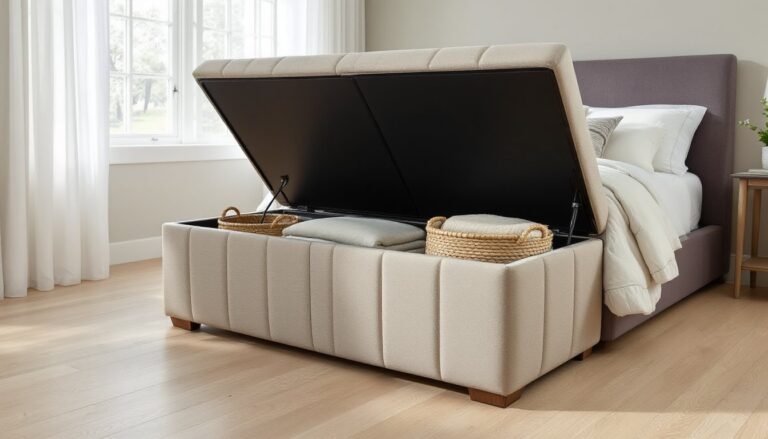
A storage bed is a bed frame with integrated compartments, drawers, lift-up platforms, or cubbies, built directly into the structure beneath the mattress. Wayfair sells hundreds of models ranging from basic twin frames with two side drawers to king-size hydraulic-lift platforms that open like a treasure chest.
The primary advantage is vertical space utilization. Instead of buying separate dressers or plastic bins that eat up floor space, a storage bed tucks items into the footprint you’re already using. For a standard queen bed (60″ x 80″), you can gain 12 to 30 cubic feet of storage depending on the design, that’s roughly equivalent to a small closet.
Wayfair’s range includes solid wood, engineered wood (MDF or particleboard with veneer), and upholstered models. Prices span from around $200 for a basic twin platform to $1,500+ for a king with gas-lift hydraulics and solid wood construction. Material quality directly affects longevity: particleboard frames may sag or strip screws under repeated use, while plywood or solid wood boxes handle the stress of frequent drawer opening and the weight of stored items.
Another reason to choose Wayfair specifically is filtering and reviews. The site lets you sort by bed size, storage type, material, weight capacity, and customer ratings. Read reviews for assembly difficulty and actual drawer depth, marketing photos often exaggerate usable space. Many DIYers have successfully tackled these projects, as evidenced by practical examples shared on younghouselove.com, where budget-conscious renovators document real-world builds.
Top Types of Storage Beds Available at Wayfair
Wayfair groups storage beds into a few main categories. Each has trade-offs in access speed, capacity, and assembly complexity.
Platform Storage Beds with Built-In Drawers
These are the workhorses of the category. The bed frame sits on a solid platform (no box spring needed), and drawers slide out from one or both sides. Common configurations include:
- Two-drawer models: Large drawers at the foot or flanking the sides. Each drawer typically measures 24″ to 30″ wide and 12″ to 16″ deep, enough for folded sweaters, shoes, or small bins.
- Four- to six-drawer models: Drawers run the length of both sides. Expect narrower individual drawers (18″ to 24″ wide), better for organizing smaller items like linens or craft supplies.
- Bookcase footboards: Some platforms add open cubbies or shelves at the foot, useful for books or decor but less secure for items you want hidden.
Drawer glides matter. Ball-bearing or soft-close glides (often Euro-style undermount) handle heavier loads and last longer than plastic or friction glides. Check the specs: drawers rated for 50+ pounds won’t sag when loaded with heavy bedding.
Weight capacity for the sleeping surface usually runs 600 to 1,000 pounds for queen and king sizes, sufficient for two adults and a mattress. If you’re storing heavier items (like books or tools), confirm the frame uses center support beams or legs, especially critical for queen and king sizes.
Hydraulic Lift Storage Beds
Also called gas-lift or ottoman beds, these use a hinged platform that lifts from the foot or side to reveal a storage well beneath the entire mattress. Popular models featured in storage bed roundups often highlight this style for maximum capacity.
Capacity: A queen hydraulic bed can offer 20 to 30 cubic feet of open space, no dividers, so you can stash bulky items like luggage, seasonal gear, or even a folding bike.
Mechanism: Hydraulic pistons (similar to hatchback struts) assist the lift. Quality units use gas struts rated for 80 to 120 pounds each (two or four per bed). Cheap struts fail within a year: look for models with replaceable, name-brand pistons like Stabilus or generic equivalents with a warranty.
Access trade-off: You need clearance behind or beside the bed for the platform to swing open (usually 18″ to 24″). That rules out beds pushed tight against walls unless you choose a side-opening model. Also, you must remove bedding and pillows each time, fine for seasonal items, inconvenient for daily access.
Assembly complexity: Hydraulic beds require precise alignment of hinges and struts. Budget three to four hours for a two-person team, and double-check that hinge bolts are torqued to spec (usually hand-tight plus a quarter turn with a hex wrench).
How to Choose the Right Storage Bed for Your Bedroom
Start by measuring your room and existing furniture. A storage bed’s footprint matches a standard bed, but drawer clearance adds 18″ to 24″ on whichever side the drawers open. If your nightstand sits 12″ from the bed frame, you’ll need to relocate it or switch to a lift model.
Floor type and weight: A fully loaded queen storage bed can exceed 800 pounds (frame, mattress, stored items, occupants). Most residential floors handle this fine, but if you’re on an upper story with older joists (common in pre-1980 homes) or a mobile home, confirm your floor’s live load rating (typically 40 PSF for bedrooms per IRC). Spread weight with a platform bed that has multiple legs rather than a perimeter frame.
Material quality for your use case:
- Solid wood (pine, oak, birch): Strongest, accepts multiple re-assemblies without stripped holes. Costs $600 to $1,500+ for queen. Worth it if you move frequently or plan to keep the bed 10+ years.
- Plywood or engineered hardwood: Mid-range durability, lighter weight. Good for rentals or medium-term use. $300 to $700.
- Particleboard/MDF with laminate: Budget-friendly ($200 to $400) but less forgiving. Screw holes can strip: avoid if you’re heavy on drawer use or have kids climbing on furniture.
Upholstered vs. non-upholstered: Fabric or faux-leather beds look sleek and match contemporary decor trends, as seen in ideas shared on apartmenttherapy.com. But, upholstery adds weight, complicates cleaning (spills, pet hair), and can hide frame quality. If you choose upholstered, verify the frame material in product specs, don’t assume a $400 upholstered bed has a solid wood core.
Drawer vs. lift for your habits: If you access stored items weekly (off-season clothes rotation, extra bedding for guests), drawers win. For annual or biannual access (holiday decor, archive boxes), a lift bed maximizes capacity. Don’t buy a lift bed thinking you’ll use it daily, it’s inconvenient.
Mattress compatibility: Most storage beds need a low-profile or medium-profile mattress (8″ to 12″ thick). A 14″ pillow-top can push total bed height above 36″, making it awkward to climb into and visually dominating in rooms with 8-foot ceilings. Measure your current mattress and add the platform height (usually 12″ to 18″).
Assembly Tips and Installation Best Practices
Storage beds arrive in flat-pack boxes weighing 80 to 200+ pounds total. Plan for delivery to your room or at least the hallway, maneuvering heavy boxes up stairs solo is a recipe for back injury or drywall damage.
Pre-assembly checklist:
- Acclimate materials: If the bed shipped in winter or was stored in a garage, let boxes sit in the bedroom for 24 hours. Temperature/humidity swings can cause engineered wood to warp slightly: acclimation reduces this.
- Inventory all parts: Before opening hardware bags, confirm the parts list. Missing a critical bracket or drawer slide means a frustrating stop mid-build.
- Clear the workspace: You’ll need floor space equal to the bed’s footprint plus 3 feet on all sides for maneuvering panels.
Tools and PPE:
- Power drill/driver with Phillips and hex bits (better control than a screwdriver for 50+ screws)
- Rubber mallet for cam-lock fittings (common in Euro-style flat-pack furniture)
- Level (2-foot or longer) to check platform alignment
- Work gloves to protect hands from sharp edges on metal slides
- Safety glasses if drilling pilot holes in hardwood
Step-by-step best practices:
- Assemble the base frame first: Connect side rails, headboard, and footboard. Don’t fully tighten bolts yet, hand-tight plus a few turns. This lets you adjust squareness.
- Check for square: Measure diagonals corner to corner. If they’re within 1/4″, the frame is square. Adjust before final tightening.
- Install drawer slides or lift hinges: Follow the manual’s spacing exactly. For drawer slides, use a spacer block (a scrap piece of wood cut to the specified height) to hold the slide level while you mark holes. Drill pilot holes in hardwood to prevent splitting.
- Attach center supports: For queen and king beds, a center beam with legs is standard. This beam prevents platform sag. Torque bolts to snug, then add a quarter turn.
- Test drawers or lift before adding the mattress: Slide drawers in and out fully, checking for binding. For lifts, operate the mechanism several times to confirm smooth action and that struts hold the platform open at 90 degrees.
- Final tightening: Go back through all bolts with the hex wrench or drill, ensuring none are loose. Under-tightened fasteners lead to squeaks and frame flex.
Common pitfalls:
- Reversed drawer slides: Left and right slides aren’t always interchangeable. Double-check orientation.
- Over-torquing in particleboard: Stop tightening when snug. Particleboard strips easily: you can’t just “crank it down.”
- Ignoring shims: If your floor is uneven (common in older homes), use plastic shims under legs to level the bed. A rocking bed stresses joints and causes squeaks.
Safety note: Storage beds are heavy when assembled. If you need to move the bed later, disassemble it. Dragging a fully built storage bed across carpet or hardwood risks frame damage and floor scratches. Get a second person for any lifting, back injuries aren’t worth the time saved.
For more guidance on specific bed sizes and configurations, check out options like a full size storage bed, which offers a practical middle ground for guest rooms or smaller primary bedrooms.
Conclusion
A Wayfair storage bed can reclaim square footage and reduce bedroom clutter, if you pick the right type and assemble it correctly. Measure your space, match storage style to how you’ll actually use it, and don’t skimp on material quality if you need longevity. Take your time during assembly, use the right tools, and enlist help for heavy lifting. Done right, you’ll have a functional piece of furniture that earns its footprint for years.